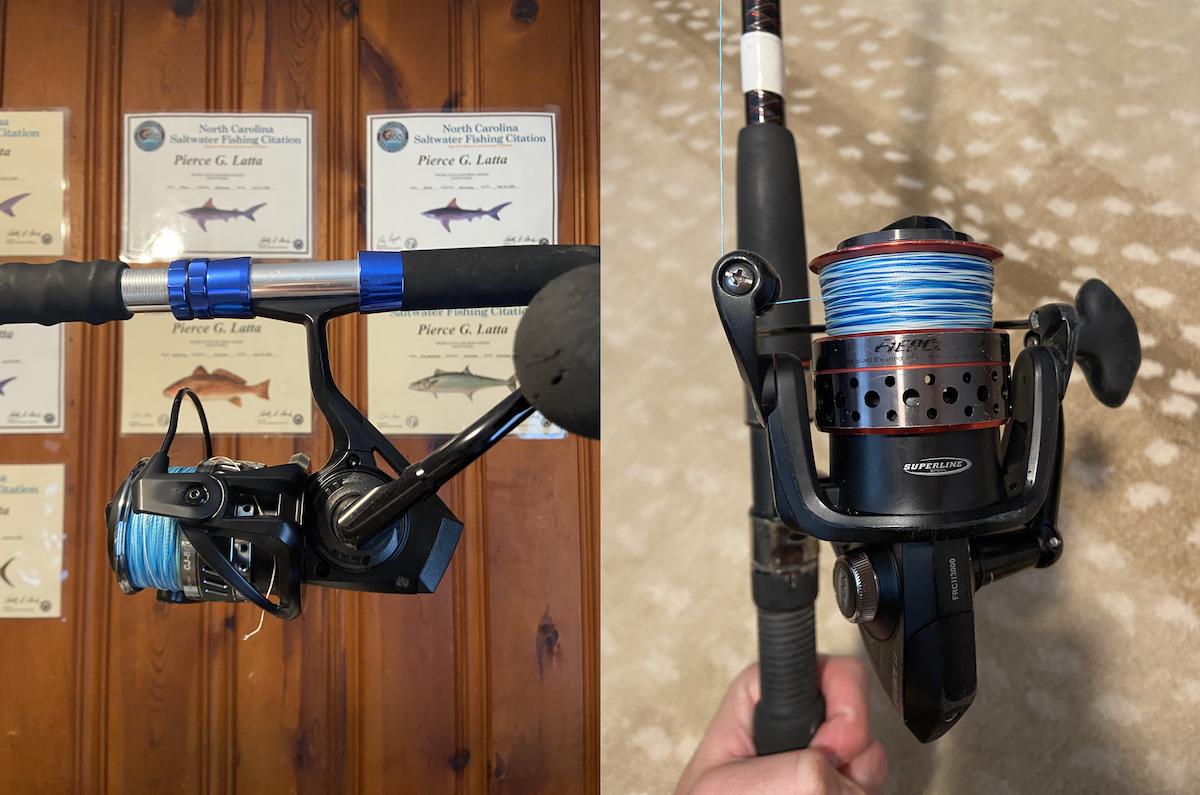

Any question about the article?
Please use your work e-mail, so we can connect with you
Spanish mackerel might just be one of the most popular nearshore saltwater species that you can catch in the United States. This is particularly true on the East Coast and the Gulf Coast as Spanish mackerel often thicken up and down the coast at various points in the year. In addition to the sheer quantity of these fish, they are extremely fun to target, especially with lures when they are feeding on the top. There are also other ways to target Spanish mackerel, but in this particular article, I’m going to be staying pretty on topic talking about the best lures to use when fishing for them. Lastly, these prolific nearshore fish make great table fare and can be cooked and served in a variety of different ways, all of them yielding tasty meals for you and your family to enjoy. This being said, Spanish mackerel are an all-around great species to target due to how fun it is to catch them, their large numbers, and excellent table fare.
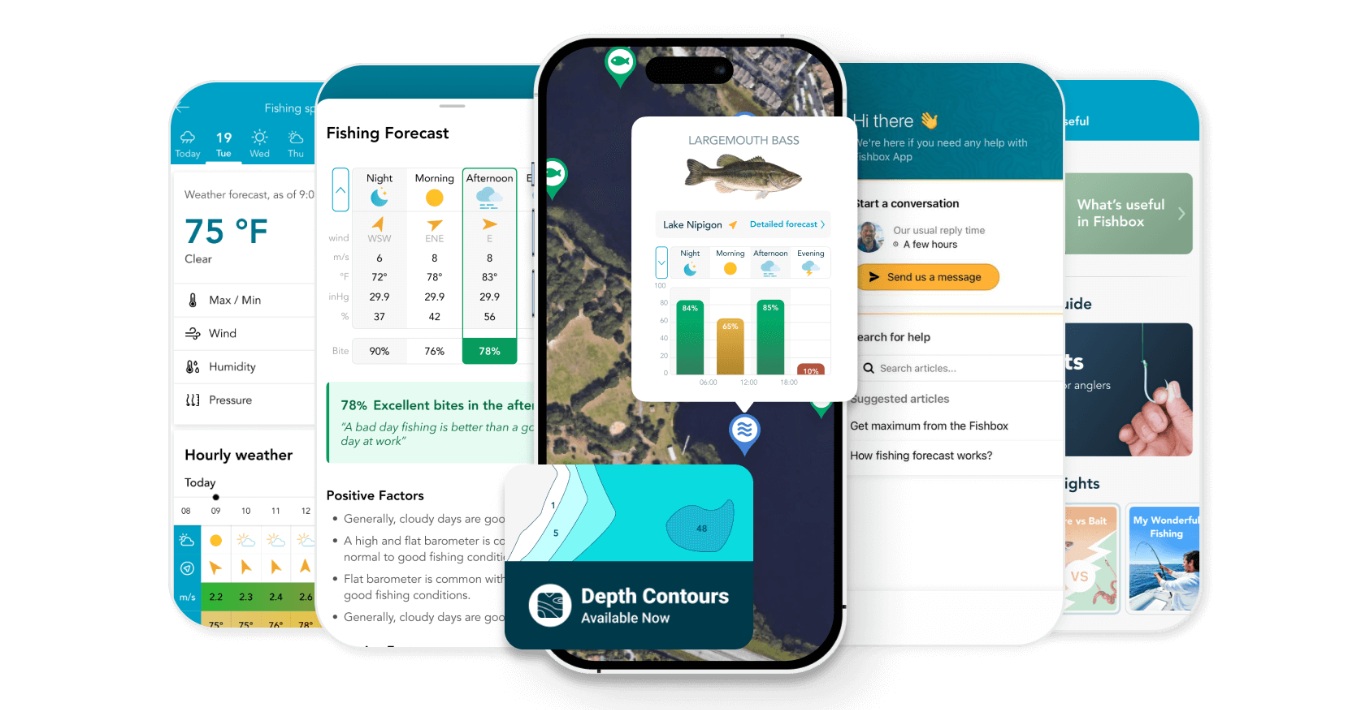
Before I get into the article, I would like to highlight one aspect of my fishing arsenal that has helped me to succeed even more over the past few years, the Fishbox App. The Fishbox App is chock-full of extremely helpful information that is designed to help you succeed on the water. Some of the things that the Fishbox App has helped me with are generalized bite scores for an area, popular baits for certain spots, and super detailed weather reports that give me a great picture of what I can expect that day on the water. These factors allow me to have far greater success and awareness when I’m on the water trying to kill some fish. I would encourage you to just give this app a try. However, if that’s too much work, go to this link and fill out this quick survey to get your very own personalized fishing map. Without any more delay, let’s get right into the article.
Before we get deep into the meat of this article, I think it is important to first get a grasp on the species we are targeting. This includes looking at its biology, habits, habitat, value, and more. Without more delay, let’s look at what makes this fish so awesome.
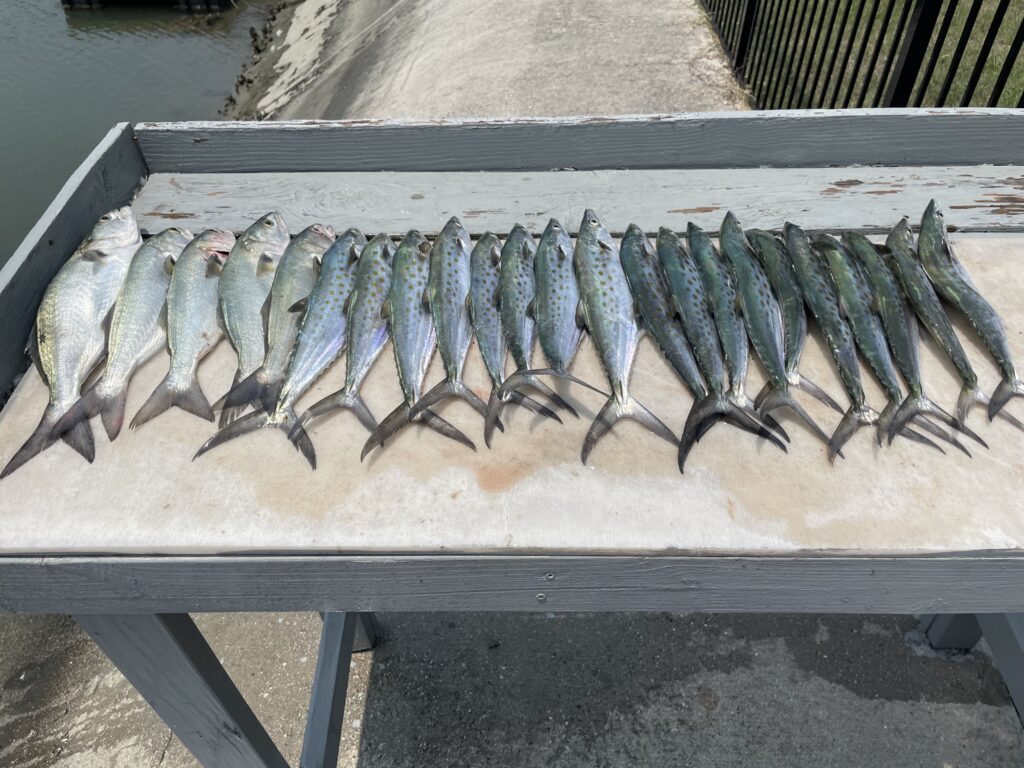
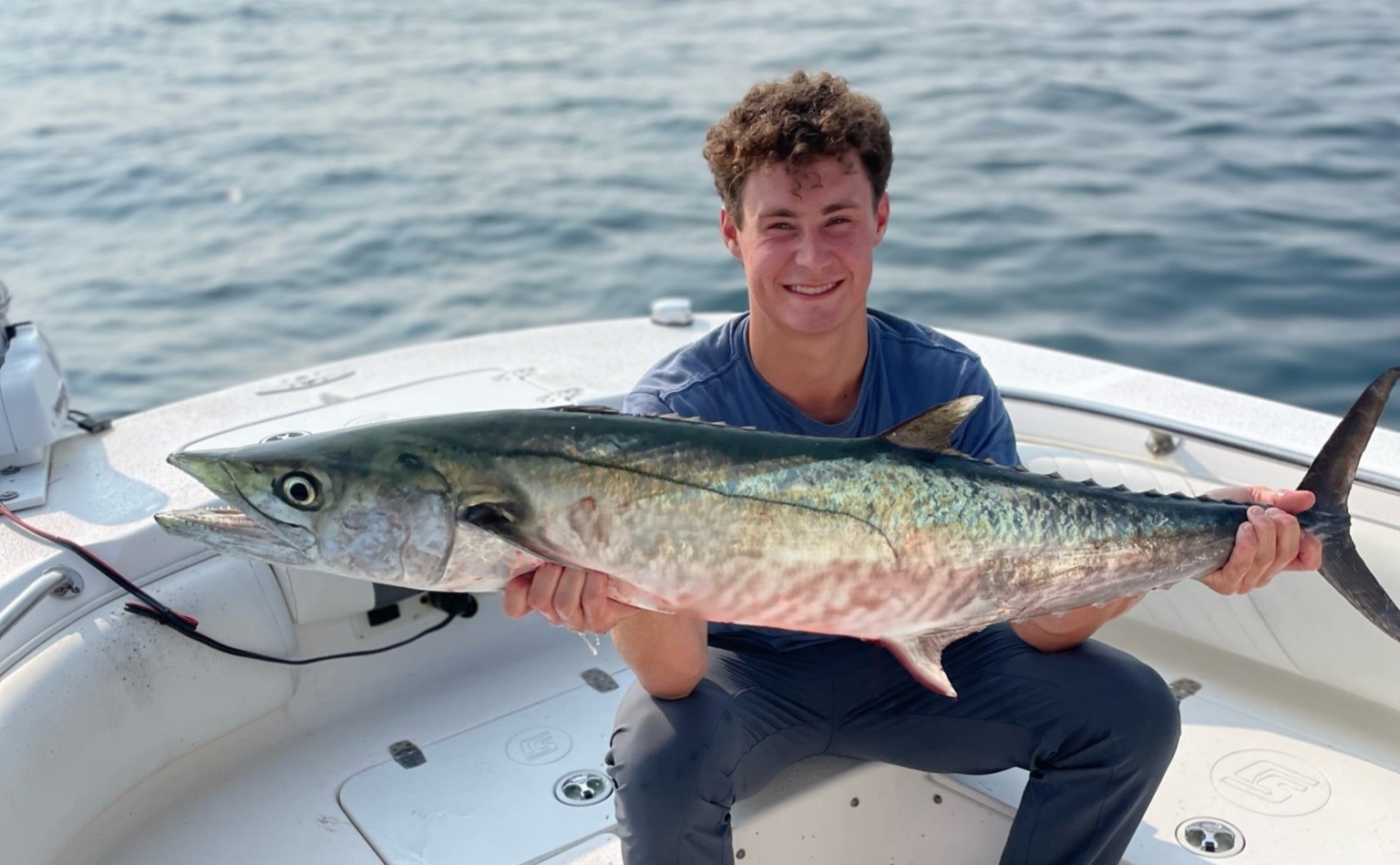
As you might have guessed, Spanish mackerels are part of the mackerel family, but this mackerel family is actually a part of the tuna family. These fish love open water, but particularly open water with structure below so that there is bait around for them to feed on. In addition, they like warmer waters in the mid to high 60s. This temperature depends on where you are fishing and is totally subject to change. I’ve had great Spanish mackerel bites from early spring up until the late fall at times and everywhere in between. These fish grow extremely quick when young and have a long spawning season. Most Spanish mackerel are between 12 and 18 inches but can get substantially larger, measuring in at almost 36 inches. Spanish mackerel are extremely fast fish and often travel in schools. Not only are these fish operating in schools most of the time, but they are also highly migratory, moving up and down the coast all year long. They are highly aggressive when they are feeding and will often come to the top to feed on smaller baitfish like glass minnows.
Spanish mackerel are extremely valuable fish both in terms of money and the sport of fishing. For starters, Spanish mackerel are a widely sought-after fish because of their abundance. Commercial fishermen will catch millions of these fish every year, with many being sold back to people in markets and in stores. Even though these fish are abundant and relatively easy to catch, they still taste wonderful and can be cooked in a variety of different ways. Some of the best things I have done with Spanish mackerel have been frying them for fish tacos or just pan-searing them with a cast iron. Spanish mackerel are best tasting when they are freshly caught. If frozen, they can start to develop a bit of a fishy taste. Additionally, to make the quality of the meat even better, I would highly suggest bleeding these fish and putting them in a saltwater brine once you have caught them. This will help to firm up their soft meat and also make them taste a bit less fishy. Lastly, the Spanish mackerel has a lot of value due to its aggressive, schooling nature and ease of catching. I and many other anglers love chasing these Spanish mackerel when they are feeding on the top of the water, where they will crush virtually anything that comes in front of them. With all this being said, hopefully you can see the value of these wonderful and abundant fish.
Targeting Spanish mackerel, especially when targeting these fish with lures, requires knowledge of the right time of year, day and weather in order to maximize your chances of success. Knowing the different habits of Spanish mackerel of the course of the year can make or break your day on the water. Because of this, we’re going to go over the times of year, day and the best weather required for catching the most Spanish mackerel.
From both my experience and research, there are two great times of year for Spanish mackerel fishing, with a decent window in between them. First, it is important to note that winter is simply not that great for Spanish mackerel fishing, especially when using lures. These fish will often push into deeper waters and won’t feed on the top nearly as much as in the other seasons.
However, as the waters start to warm in the springtime around late March and early April, the Spanish schools will start pushing toward the beaches. Now, it should be noted that, in general, this class of fish is smaller than in the fall run, but there’s still a load of them nonetheless. This is a great time of year to bust out the lures and artificials and look for them schooling and busting on the top.
As spring pushes into summer, the size of the average fish will increase a little bit, but the school’s busting will taper off a bit. Sometimes, if you can get out on the water early enough in the summer, you can still take advantage of the Spanish action before that water starts to get too warm and the fish push lower. In summary, Spanish fishing can be good during the summer, but you have to know what you’re doing a bit more.
Now, we’ve finally arrived at the best part of the year: the fall. Hands down, the fall produces the best schools of fish and the best class of fish you will see all year round. Pay careful attention to when the water starts to cool down at the end of August and during September. When this happens, the Spanish tend to go nuts, and you can often see massive schools of busting fish that are acres big (I’m not exaggerating, by the way). When these fish are busting in the fall, you can often throw literally anything at them and they will hit it. Additionally, you will often see a ton of bluefish in the mix as well. These will hit the same lures as Spanish, so if you are targeting Spanish, you may need to move off of that particular school and try a different one to find the Spanish that you are after.
Just like many of the other fish we target on a daily basis, there are two times of day that are going to be the most productive in terms of Spanish mackerel—early morning and evening. These two windows are simply going to be where there is the most surface/feeding activity from these fish, thus giving you the best chances of catching them.
First, let’s start with the morning. Across the board and from my own experience, anglers will tell you that the first couple of hours in the morning is the most crucial time for catching Spanish mackerel. It is in these first couple of hours of sunlight that the fish are actively feeding on the surface, attacking schools of glass minnows and other small fish. I have noticed that in the fall and spring, this morning bite window continues a bit longer than during the summer. If you are trying to catch Spanish mackerel during the summer, you need to be out there early in order to maximize your chances of catching.
Now, let’s move on to the evening. This is another good bite window for Spanish. While it’s not typically as productive as that morning bite window, you should still be able to find Spanish busting on the top that you can throw lures and other artificial baits at.
All in all, you can definitely catch fish outside of these two bite windows, but I would highly suggest planning your day around one of these windows, as that is when you catch the majority of your fish.
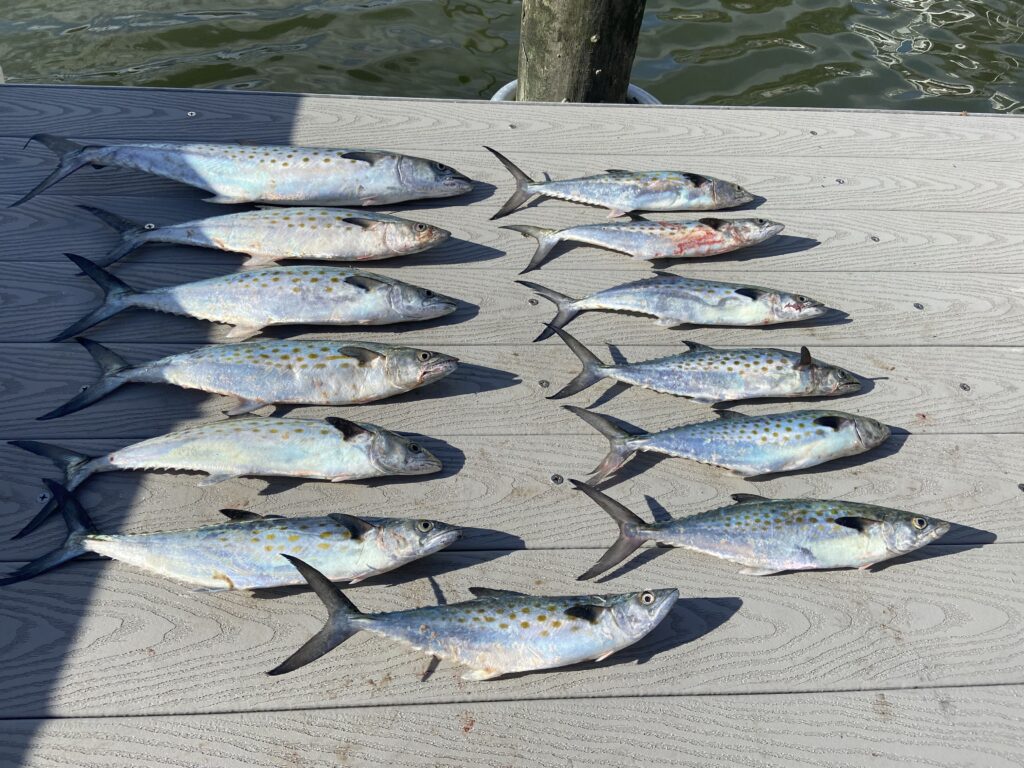
Weather and water conditions are another large factor when it comes to catching Spanish mackerel. These fish have notoriously good eyesight, so the weather has to be ideal for our best chances of catching them. However, it should be noted that when Spanish mackerels are feeding in a frenzy, they will eat anything regardless of what it looks like for the most part.
First, let’s talk about the weather. Since Spanish mackerel are going to be in the ocean, we don’t want too much wind. We need enough to disturb the surface and move bait, but not dirty up the water. Additionally, we always want at least a bit of sunlight so that these Spanish can see our baits better. Partly cloudy is also fine, but I prefer the most sunlight.
Second, let’s talk about what we want to see in the water. Ideally, we want a temperature of about 65 degrees Fahrenheit. Seventy to seventy-five degrees is going to be that sweet spot, but you can catch these fish outside of that range. Additionally, we want our water visibility to be stellar and for it to be a clean green or blue shade. Spanish mackerel really don’t like dirty water, so we want to stay away from this. The only exception to this rule is when you are fishing a tide line or color break where the water goes from dark and murky to more clear (this often happens outside of inlets).
Below, I’m going to list the best, most tried-and-true lures and artificial baits for catching Spanish mackerel. If I missed one on the list below, feel free to let me know. Without further delay, let’s get into the best artificial baits and lures for Spanish mackerel.
This section, as you might have guessed, is about specific baits that have been and continue to work for Spanish mackerel. The next section will simply highlight what baits typically produce results.
This section is going to be about the general class of baits that tend to produce Spanish mackerel.
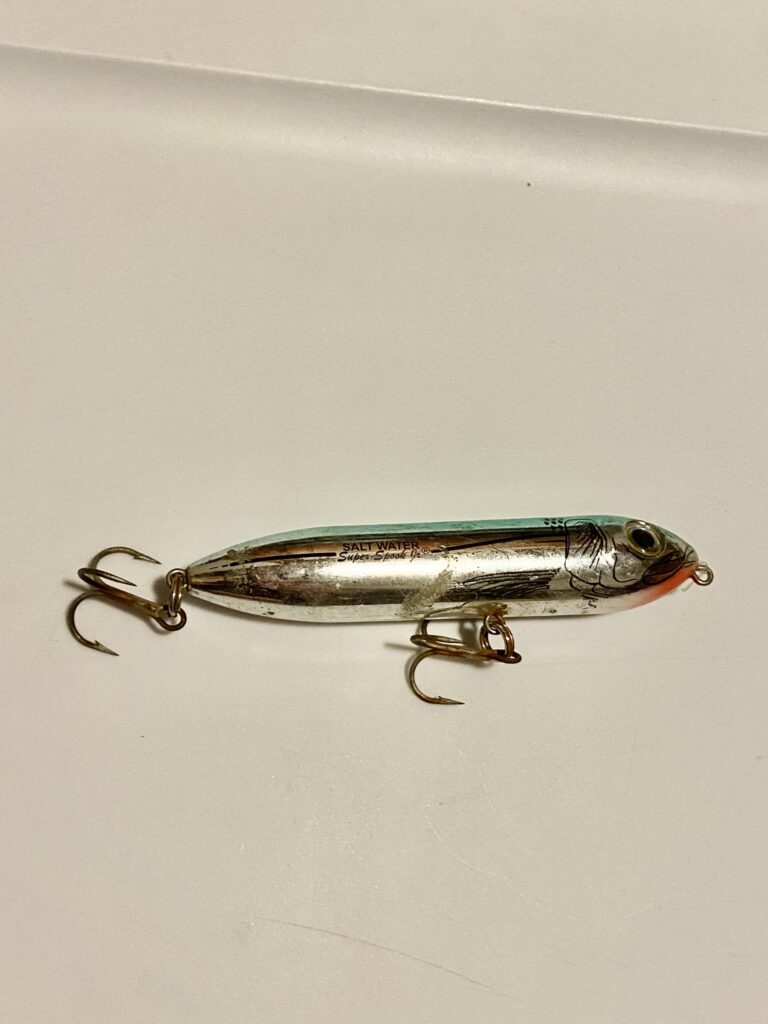
There are obviously a ton of different Spanish mackerel baits out there, and this is simply a list of many of the popular ones. I’m sure I missed some here, but this is what was compiled based on my experience as well as research. If you have any more to recommend, please feel free to let me know!
Read also: How to Hook a Live Bait: Expert Advice to Keep Fish on a Hook
There are a few popular techniques anglers will use to target Spanish mackerel. In this section, I’m going to break down some of the most effective and popular methods of putting these fish in the icebox. Now, I’m going to put a heavy focus on methods that require artificials and lures, but I’ll briefly hit some of the other popular methods and get those out of the way first.
While this is not a means of targeting Spanish mackerel that requires lures or artificial bait, I do believe it is popular enough to talk about and discuss so you guys can at least have a general idea of what this method entails. Basically, it’s going to be the same as live bait trolling for king mackerel but on a smaller scale. You’re going to want smaller live baits like 3–4″ pogies or finger mullet. Hook these with a treble hook and keep the boat moving forward fast enough that the bait can swim and cover ground. However, you don’t want to go too fast and drown your baits and kill them. Cover areas where there is known structure such as live bottom or artificial reefs and wrecks.
Chum and freeline is another popular method that doesn’t require artificial bait or lures. This method involves going to a spot where there is a known structure like the places I listed above. Once you get on one of these spots, you’re going to want to spot a lock or anchor. From here, you will chuck out a ton of live baits to get the Spanish mackerel in the area fired up. Now, you will just use a small bit of wire with a single hook (can be a treble but doesn’t have to be). You will then freeline out the bait and let it swim away like it was just another piece of chum. If you’ve already riled up the Spanish mackerel, it shouldn’t take long to get bit at all.
Trolling is one of the first two methods for using artificial baits and lures for Spanish mackerel. Trolling is simply using artificials pulled behind the boat at a certain speed. The goal is to cover ground and figure out where the Spanish mackerel are. From my experience, trolling is most effective when using Clarkspoons on a mix of size 1 and 2 planers with some bullet weights as well. My typical spread is two Clarkspoons on each of the planer rods, with one on a size 1 planer and the other on a size 2. I also run two light outfits pulling Clarkspoons behind bullet weights on top. Once you start fishing, you can begin to see what is getting hit more or less and adjust your spread accordingly.
When I am trolling, I try to keep the boat between 5 and 8 miles per hour. If you are getting too many bluefish, you can speed up so that only the Spanish will be able to swim fast enough to get those baits. The opposite is also true if you are wanting to target bluefish.
One more note: these trolling tactics are subject to change based on the lures and baits you are using. Most trolling spoons can be swapped in place of these Clarkspoons if you are not a fan. Additionally, you can also run baits with bills instead of planers. These baits, like X-Raps, can get down just as deep and don’t need the planner to do so. However, in all honesty, based on my years of experience fishing for these fish and talking to tons of anglers, Clarkspoons are just the simple answer and the go-to for most people. They just work, so don’t be afraid to start with them.
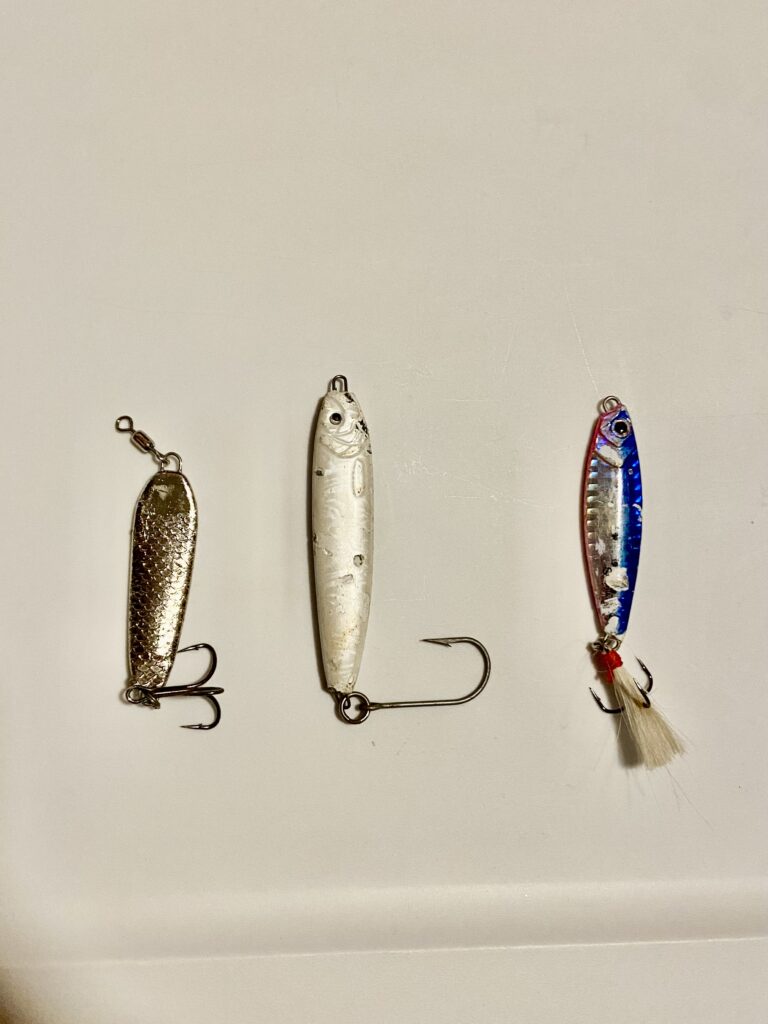
The final and most fun method to catch Spanish mackerel on artificial baits is throwing casting spoons. I typically just use a lighter spinning rod with a 20-pound leader attached to some sort of spoon or jig (essentially any of the baits we talked about above will work). For best results, try to find the fish and/or bait up on the top first. From here, use your boat or walk down the beach to get within casting range. One of the most important things from my experience is casting past the school if you can. This allows the lures to reach the desired speed and action before the Spanish see them, that way a bite is far more likely.
Out of all of these methods discussed above, my favorite is definitely casting. Not only does it almost always produce better results than the other methods, but it is simply more fun and results in a lot more finesse, high-action fishing all day long.
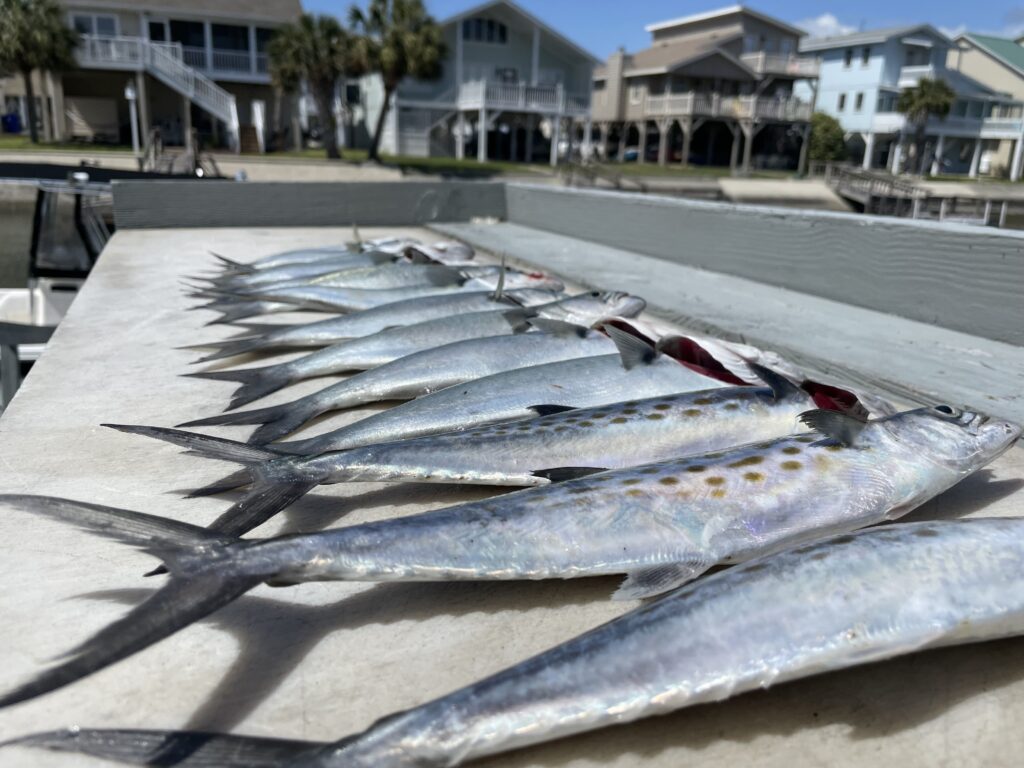
While we briefly discussed trolling in the last section, I would love to go into this method a bit deeper because it is the most popular method for catching Spanish mackerel across the board. Not only is this method popular, but it is also highly effective and can yield great results if done correctly.
Let’s start with gear first. For your planer rods, you’re going to need some beefier rods and reels because the planers will put a significant amount of strain on the rods and reels. I recommend Penn Squall combos (PENN Squall II Lever Drag Conventional Combo | Bass Pro Shops), but there are plenty of other viable options out there. For your lighter-action trolling rods, I love my Ugly Stick GX2s (Ugly Stik GX2 Spinning Rod | Bass Pro Shops) with a spinning reel of your choice (my preference has always been the Penn Fierce II (PENN Fierce IV Spinning Reel | Bass Pro Shops)).
For your line, you’re going to want a 20 to 30-pound braid in order to maximize strength and capacity. Beyond this, you’re going to need size 1 and 2 planers for your conventional setups and then some 2–4 ounce trolling weights for the spinning rods. For each and every single one of these rigs, you want to use a good bit of leader simply because of the good eyesight that the Spanish mackerel have. I prefer 10–15 feet to make it manageable, but some guys will run up to 30 feet. If you can afford it, run fluorocarbon for the leader, but if not, monofilament will work great. From here, just tie on your artificial baits and you’re ready to go.
Like I said earlier, spots and water clarity are a bigger factor when it comes to trolling. You need to be in spots with both good water quality and good structure. The combination of these two will yield the best catch results. Nearshore reefs and wrecks from 20–50 feet of water can be a great place to start, as well as in front of inlets. In southern North Carolina, our depth sweet spot has always been around that 25–30-foot mark.
Beyond this, there’s not too much else to discuss other than speed. Run between 5 and 8 miles an hour and adjust the speed if needed based on the bluefish, which I mentioned above. Too slow and you’ll only get bluefish. Additionally, when those planer rods pop or the surface rods bend over with a bite, keep the boat in gear and start to reel in the fish. These fish can pull hooks and shake them super easily, so be gentle when reeling them. Now, you should know everything you need to get on the water and start trolling for Spanish mackerel. Good luck!
Read also: Spanish Mackerel Fishing Guide & Tips: How to Catch Spanish Mackerel Like a Pro
Before we come to the close of this article, I believe it’s important to go into a bit more depth on the right spots for Spanish mackerel fishing. Now, this is super interesting because Spanish mackerel aren’t always in a “spot.” Especially when schooling in the fall and spring, these fish are just following bait schools tied down to nothing at all. However, there are always pockets of fish that do tend to hold to the spots we’re about to talk about.
Structure: Structure is probably the biggest factor when it comes to locating Spanish mackerel. If these fish aren’t obviously busting on bait on the surface, always go to the structure like nearshore reefs and wrecks. Sometimes it’s necessary to bounce around between spots to find the fish successfully.
Bait: One of the biggest factors in locating a good spot for Spanish mackerel is bait. These fish are aggressive and need something to feed on. So, if you pull up to an artificial reef and don’t see any bait on the screen, that’s not a great sign at all. Go to where the bait is, and you will find success.
At the end of the day, you gotta take the conditions you’re given and make a judgment call off of them. You see fish busting—by all means, go chase them and have a day. If you don’t, go try to find that bait and structure, and the Spanish mackerel shouldn’t be too far behind.
This can really depend on the application, but most of the time you are going to want to use size 1/0 or 2/0 trebles. This is especially true when you are live baiting. In general, when using artificials, stick with the hook size that comes on the lures when you buy them.
A silver or chrome color tends to be the best, but I have had plenty of luck on other colors such as natural greens and blues, pinks, chartreuses, and white. You want that bait to either look real or stand out a ton so the fish can react aggressively to it.
The best trolling speed for Spanish mackerel is between 5 and 8 miles per hour. This can vary throughout the year and really just requires time on the water to identify your speed preferences.
In general, I would say a fish is always going to prefer live bait, but when it comes to fishing for Spanish mackerel, I do believe that Spanish are far more likely to strike a well-placed artificial bait as opposed to a live one.
The best locations to find Spanish mackerel, if they are not feeding on the top of the water, are going to be in front of inlets and around artificial reefs and wrecks nearshore.
I hope you guys have enjoyed reading this article on the best lures for Spanish mackerel fishing. I know we covered a lot, so if you have any questions at all, feel free to let me know and I’d be happy to respond to you. Have fun on the water out there, and as always, good luck and tight lines!
Pierce Latta has been passionate about fishing since the age of three, growing up casting lines in both freshwater ponds around Charlotte, NC, and the saltwater of Ocean Isle Beach. With nearly 16 years of experience, he’s explored almost every style of fishing imaginable, from fly fishing and surf casting to offshore and inshore adventures. Pierce now shares his knowledge and enthusiasm with others, offering tips, techniques, and inspiration to help anglers of all levels discover the thrill of fishing.