
Any question about the article?
Please use your work e-mail, so we can connect with you
Knowing how to spool your own spinning reels with braid is extremely important. Not only can it save you a lot of money over the years, but you can also ensure every time that it is done right and save a bunch of time in the process. The alternative to this would be getting a fishing shop or someone else to spool your spinning reels with braid for you, potentially costing you valuable time and money. Fishing is already an expensive enough sport, so let’s dig into this topic on how to spool your own spinning reels with braided fishing line.
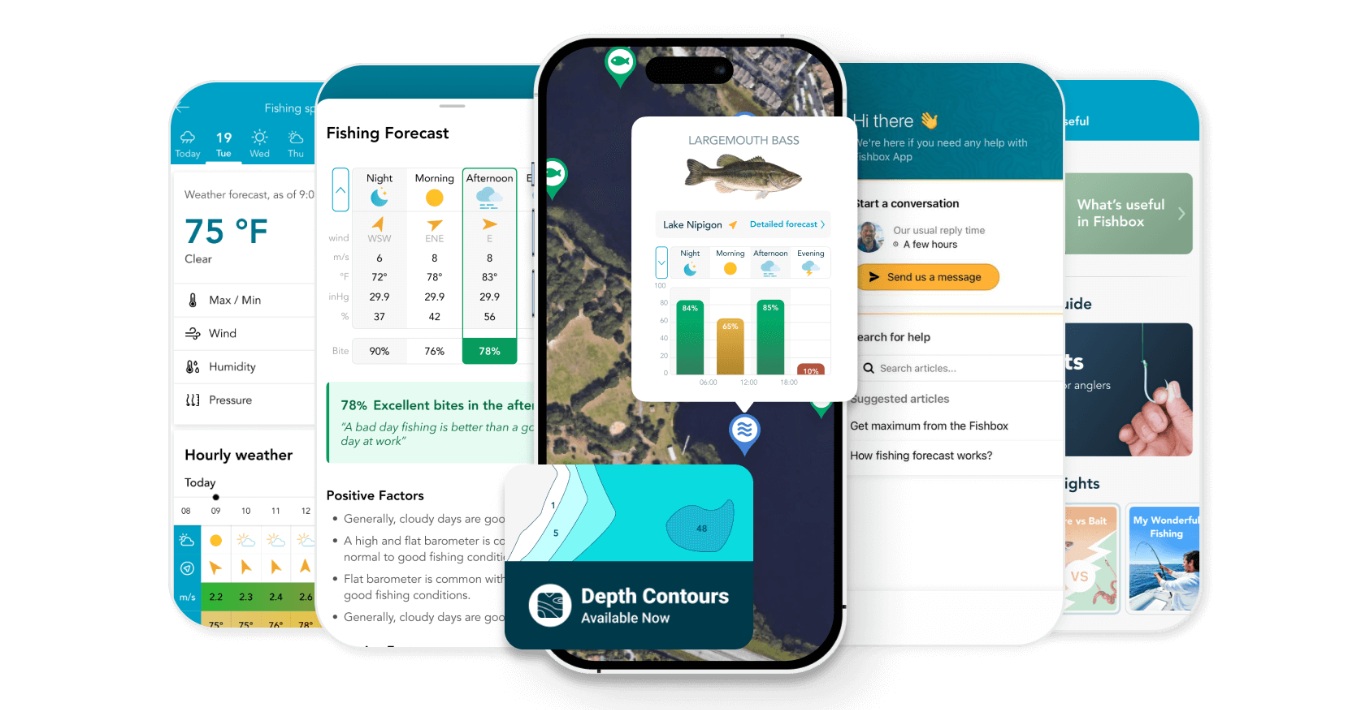
Before I get into the meat of this article, I would like to give a shoutout to an extremely helpful fishing tool that I have been using and consulting for a couple of years now – the Fishbox App. This app, just like a well-spooled spinning reel, is an extremely helpful tool when it comes to catching fish. It provides all sorts of different benefits including location analysis, in-depth weather information, and so much more. Not only this, but using this link you can take a totally free quiz to get your own personalized fishing map from Fishbox. Don’t wait—take advantage of this super helpful resource that makes tons of anglers more successful on the water each and every day .
Before we get into actually spooling the spinning reel, we need to make sure we understand them and their purpose. That way, we can know for sure if we have chosen the right reel for the job. Below are various categories that should give you, as the reader, a better idea of what you’re working with (1).
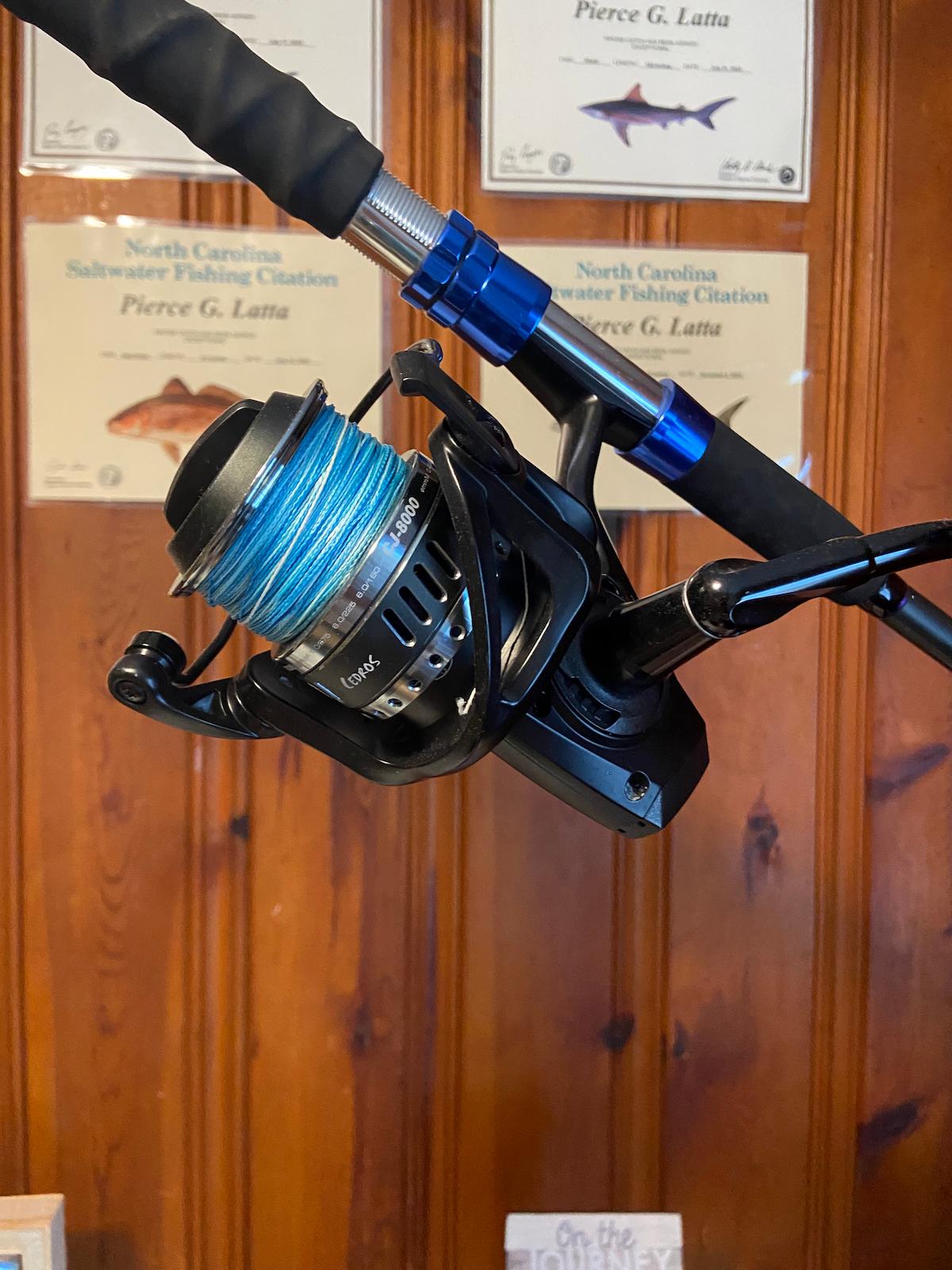
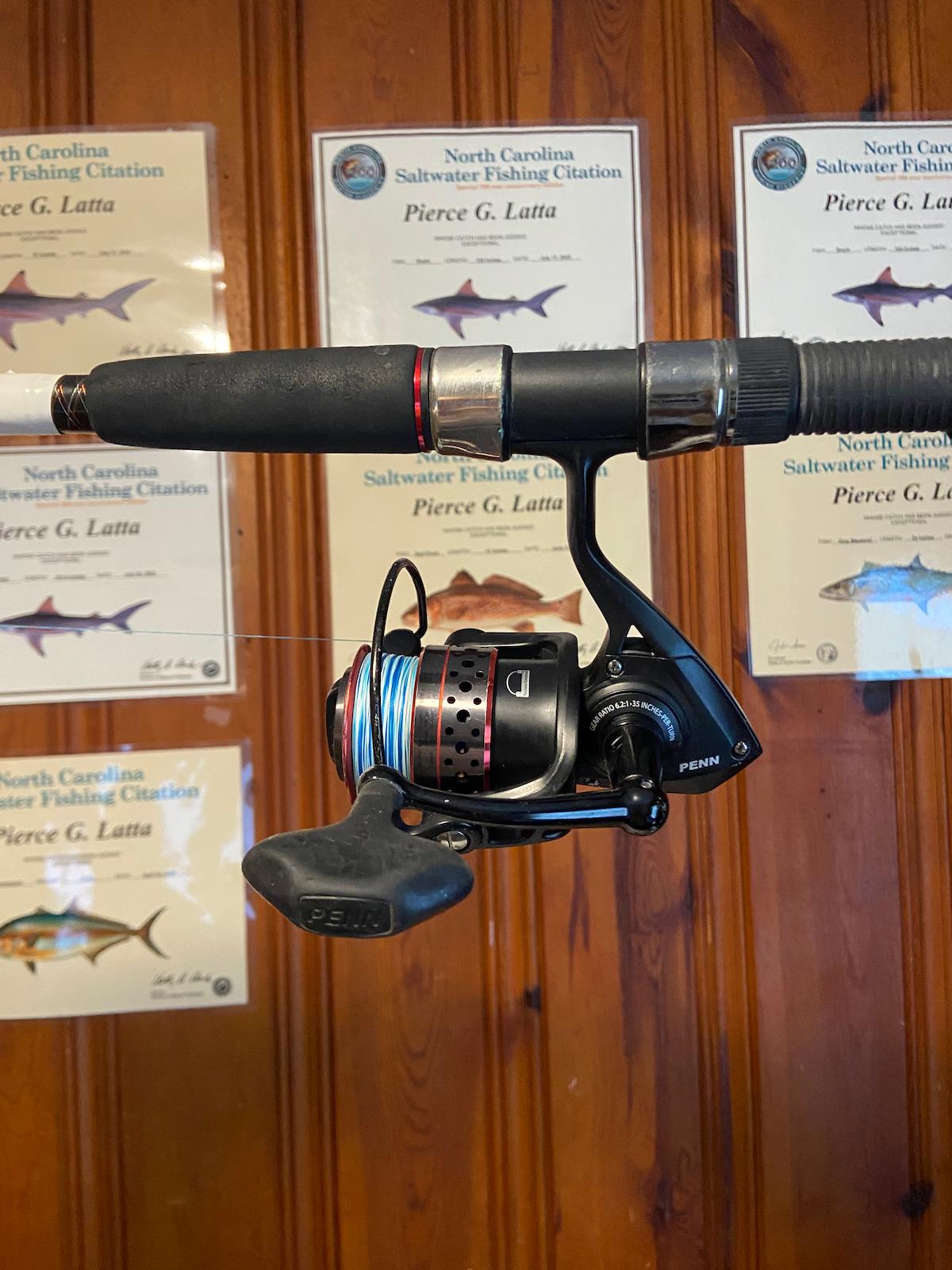
The spinning reel is a type of fishing reel in which the line spool is actually fixed on the reel. These reels have a thin metal bar, called a bail, on the top of the reel that is responsible for evenly distributing the line across the reel when you are reeling it in. When this bail is lifted and you sling the rod, the reel allows for line to shoot off, thus resulting in a cast.
At the end of the day, the purpose of a spinning reel is to catch fish. But more particularly, this purpose is often rooted in the fact that these reels are meant to cast or sling baits across distances. With any kind of fishing reel, it’s not hard to drop whatever you’re using for bait straight down. However, if you try and cast a conventional reel, you’ll be able to more fully understand the purpose of a spinning reel.
Like I mentioned above, the spinning reel works by using the advantage of a stationary spool that does not rotate when cast or reeled unless acted upon by some force that opposes the line coming back into the reel – this is when the drag is activated. Once again, as I just said, the bail moves up and down with the turning of the handle and evenly spools line back onto the reel when you’re reeling it in. When the bail is open for casting, line is allowed to come off the reel with very little force at all. This gives the angler the ability to cast and then close the bail to reel in.
In the grand scheme of things, there is really only one “type” of spinning reel, but there are a variety of spinning reels with different purposes. This difference in purpose often stems from two factors: size and price. Most of your smaller spinning reels are going to be for light tackle applications, be it bass fishing or inshore saltwater. Once you jump up around that 3500 to 4000 size, you start to get into the class of an all-around spinning reel—something that can be used for catfish, inshore saltwater, casting, and more. Finally, you have the big spinning reels, which are often used for surf fishing, pitch rods for offshore, bottom fishing reels, and more. These are just a few of the more popular “types” of spinning reels.
Braided fishing line is exactly what you would expect from hearing the word “braid.” This type of line is effectively a complex weave of several individual threads that form a stronger, heavier braid at the end. The purpose of braided fishing line is to give anglers the advantages of casting superiority and strength without sacrificing the line capacity that the reel can handle. This reality of capacity is a massive reason in and of itself for why braid is such a great thing to have.
Braid has a ton of different aspects that set it apart from its other competitor (monofilament). Before I even get started, I want to make it clear that in this particular point, I’m not discussing advantages or disadvantages—just merely aspects that set braid apart. The comparison will come in the following subsections. First, braid has minimal stretch when pulled on. It also has a very small line diameter. A ton of different colors are available, and braid has a very slick surface.
Choosing the right line is obviously an extremely important part of spooling your fishing reels. If you are still in this phase of choosing what line you want to spool your reel with, I would recommend you first go check out one of my other articles on how to pick your fishing line before moving forward in this article. Here is the article I’m referring to (2).
Now, I don’t want to leave you guys hanging, so I’ll give a quick summary of that article and some questions you should consider when picking your fishing line to spool your reel with. The choice of what to spool your reel with relies heavily on the purpose of that reel and rod. To answer this, ask yourself a few different questions, such as what species you are targeting, what baits you will be throwing, where you will be fishing, and more. From here, you need to look at the different qualities of the fishing lines you’re choosing between and select the one that matches more of these qualities than the other. From here, you should either have narrowed it down to braid or mono. And if you chose braid, you’re now finally in the right spot. However, if you’re still unsure, please review the article link I posted for more information.
Read also: Monofilament vs. Fluorocarbon: Which Fishing Line is Best for You?
Before you do anything, you need to gather all of the necessary materials to make this happen so you don’t have to get up once you’ve sat down. Some of these materials include your rod, spinning reel, line, scissors (or some cutting tool), electrical tape (optional), an old rag, a pencil, another person, and a line spooler (if applicable). This step may seem trivial, but the last thing you want to do is stand up in the middle of this process because you forgot something.
Again, this may seem like a straightforward and easy step, but it is very important. If you don’t have a line spooling device, which I’m assuming most people don’t, a rod can be a super helpful tool when spooling your line.
Once you have attached the reel to the rod, you want to start prepping for putting the braided line on the reel. To start this prep, open the bail of your spinning reel (or, in other words, put it in a position as if you’re casting it).
Now, this step is more of a personal preference that I have developed after years of both spooling my own reels and learning from more experienced anglers. Because braid can be so slick, it can be helpful to tape a small piece of electrical tape to the spool so the braid has something to dig into or cling onto. This is helpful for me, as it allows me to tie the following knot slightly easier and gives it a bit more support.
I’ll say this again, but I’m assuming that the people reading this don’t have reel spooling devices. And quite frankly, if you follow the steps listed here, you won’t ever need one. Now, if you have the extra money, it might be worth the purchase, but for the vast majority of us, this hand method will do just fine. With that being said, take your braided fishing line and thread it through the eyelets from the top eyelet down to the reel. Don’t wrap the line around the bail or try to mess with it at this point. Also, make sure the bail is still open when you are doing this step.
The next thing you’re going to want to do is take that line that you’ve just threaded through the rod and tie it around the spool. To do this, use a double uni knot or an arbor knot for the best results.
From here, cut the tag end of the knot you just created. Make sure that tag end is very short—preferably under a quarter of an inch—so that the line doesn’t bulge on your reel when filling it with line like you will in a second.
Now, because you had the bail open when you threaded the line on the rod and tied your knot, you can close the bail. This is where you can easily check if you followed the process correctly. If, once you have closed the bail, you can reel in the line normally and it’s filling correctly, you did all of the steps in the right order. This is why I said that the step about opening the bail before you tie the line to the spool is so important—because if you don’t, you won’t be able to spool your rod correctly.
From here, you can now spool the line; however, you do need to follow these directions when doing so. After you’ve closed the bail, you’re going to want to get someone to hold that spool of fishing line and put a pencil (or something like that) through the middle of it so that the spool can rotate freely. One of the biggest mistakes people make in this step is not keeping the line tight when spooling the reel. This mistake is especially costly with thin-diameter braid, as it can cut into the spool if not spooled tightly. To prevent this, have the person holding the spool use a cloth or rag to pinch the spool with to add tension. From here, keep that tension constant and reel smoothly until the reel is completely spooled to the desired amount. In general, I try to fill my spinning reels a little bit from the edge of the spool so that the line doesn’t spill off.
Finally, all you have to do now is cut your main line. From here, you can either tie on some sort of leader, a rig, or even go straight to your bait or hook if you’d like.
Read also: How to Hook a Live Bait: Expert Advice to Keep Fish on a Hook
In this brief section, I’m just going to give a few tips and tricks to help you guys out when you’re spooling your fishing reels with braided fishing line. These tips and tricks can help you save a ton of time and money over the years, so be sure to pay attention and try to learn something from this section.
The answer to this question lies in two different factors. One, the size of your spinning reel. Two, the size of the braided line you want to put on your spinning reel. So without knowing the size of the reel and the braid, it is extremely hard for me to say exactly what you will need. However, when you are looking at spinning reels, most will give you the size and yardage of how much braid can go on the reel. If your size isn’t listed, you can use online line calculators to figure these numbers out.
Additionally, one other little tip—some companies’ braid is thicker in diameter than others, and those reel line capacities are based on the diameter of the line, not the pound rating. So pay close attention to the diameter of the braid you are buying and make sure it lines up with the expected capacity on the spinning reel.
When tying braid to some sort of terminal tackle (so anything that is not a line-to-line connection), your best knots are going to be the uni knot or the Palomar knot. These knots are both proven not to slip as much as clinch knots and are very easy to tie.
For line-to-line connections with braid, whether it’s braid to braid, braid to fluoro, or braid to mono, the FG knot or the double uni knot are going to be your best bet. For heavier applications such as offshore fishing, heavier-duty knots like the FG or others are preferred, but for the vast majority of applications, the double uni knot works great.
Once again, this is a hard question to answer given I don’t know what you are targeting, however, since the reel is a very small size, you’re gonna want lighter braid so you can get the capacity you need on there. In most cases, this is going to fall between 8 and 15-pound braid. The end strength of the braid you actually select is just going to come down to how much line capacity you want to have. If you don’t need as much, you can definitely go higher in terms of strength and vice versa.
Yet again, here we are. You need to really know the application and target species before you can make a decision on what pound braid for your spinning reel. If you are bass fishing or inshore saltwater fishing, 20-pound braid is never a bad way to go. If you are using this for big catfish or offshore fishing applications, you may need 65-pound braid or even heavier. One tip, never select the braid without knowing what you are doing with it first. To a certain extent, your one rod and reel can’t do everything, so you may need to have an offshore and inshore setup, for example.
When you are spooling braided fishing line, you need to spool your reel the way that it came off the spool of the braid. The piece of line at the edge of the spool of braid should be the one threaded down the eyelids and tied around your spool. Thus, the bottom of the original spool of braid becomes the top of your braid used for your spinning reel.
For a 3000 size spinning reel, again, this depends on the application, but I would say in general you want between 150 and 250 yards of line, maybe a bit more. If you are just using this 3000 size spinning reel to bass fish, you definitely don’t need 250 yards because bass don’t ever run far. However, if you are inshore saltwater fishing, a red drum can give you a good little run and test your line capacity. With this being said, you have to make your choice using the context of how you will be fishing most often. Also, keep in mind that the yardage/capacity on your reel is going to change based on the thickness/strength of your braided fishing line.
I’ll answer this question the same way I did the previous. Given that the reel is slightly larger than a 3000 size spinning reel, I normally shoot for a capacity of 200 to 350 yards of braided fishing line. Most often, my 4000 size spinning reels are filled with about 300 yards of 20 to 25 pound braid, and this gets the job done for anything freshwater and anything inshore saltwater as well.
Yes. Braid can go directly from the spool to the reel. Now, I would recommend following the steps above, especially the one about putting a piece of tape around the inside of the spool, but this is optional.
You can, but it’s totally optional. Some people like wetting the line while spooling their spinning reels with braided fishing line to lube it up, but I never have. For me personally, it’s just too much of a hassle to try and wet every bit of line while I’m putting it on my spinning reels. I’ve never wet my braided line once over the years and have never had an issue.
Theoretically, they have the exact same breaking strength as one another. However, in practice, I tend to lean toward the fact that braid is actually slightly stronger than mono due to the fact that it is multiple different strands of line combined into one.
You can totally wet your braid before spooling the spinning reel like I mentioned above, but it is generally not recommended that you soak the braid before you spool it.
There are a couple of different downsides to braided fishing line. One big one is the cost. You’re paying more for a more premium product. Another downside is the fact that it is slicker and thus harder to tie knots with than monofilament or fluorocarbon. Additionally, braid can dig into the spool if not spooled correctly, and it’s also more visible in the water. For this reason, braid is generally paired with some kind of leader, usually fluorocarbon.
For the most part, research suggests that 8-strand braid is better than 4-strand. 8-strand is theoretically the same strength as 4-strand at the same breaking weight, but in practice, 8-strand appears slightly stronger. However, the biggest factor most people don’t consider is how smooth the braid is. 8-strand braid is significantly smoother than 4-strand braid and doesn’t reel as roughly on the guides of the rod or the reel as much as 4-strand braid does.
Instead of using one or the other on your spinning reels, I would suggest using both. Use some sort of braided fishing line as your main line, and then use a line-to-line connection knot like a double uni or an FG knot to attach a fluorocarbon leader. Typically, this leader is about 3 to 5 feet in length. This gives you the benefits of both, giving you better casting range and strength, but also the stealth and longevity that comes with a fluorocarbon leader.
Braid is very rarely ever banned, and if it is, it’s generally for environmental reasons because people don’t want it getting stuck in things like coral or other environments that could affect wildlife.
While spin cast reels are definitely more designed for monofilament fishing line, you can technically put braid on them. However, I would like to note that you should always choose a spinning reel over a spincast reel. Spincast reels are simply not as refined as spinning reels and can result in a lot of hassle and extra work. Just buy the spinning reel. Thank me later.
I hope you guys enjoyed reading this article about spooling your spinning reels with braided fishing line. While this task may seem trivial to some, knowing how to spool your own reels with line can save tons of time and money, especially over the years. I know there were a lot of specifics in this article, so if you guys have any questions or concerns, please feel free to let me know, and I will happily get back to you. As always, good luck and tight lines!
Pierce Latta has been passionate about fishing since the age of three, growing up casting lines in both freshwater ponds around Charlotte, NC, and the saltwater of Ocean Isle Beach. With nearly 16 years of experience, he’s explored almost every style of fishing imaginable, from fly fishing and surf casting to offshore and inshore adventures. Pierce now shares his knowledge and enthusiasm with others, offering tips, techniques, and inspiration to help anglers of all levels discover the thrill of fishing.