
Any question about the article?
Please use your work e-mail, so we can connect with you
You must use the right fishing line when fishing in saltwater environments. Due to the corrosive nature of saltwater and salty air, you need to be able to trust your line to withstand these harsh conditions—at least for some time.
Picking the right line can often be difficult, considering various factors. These factors include price, color, stretch, strength, thickness, and more. Choosing a freshwater fishing line is already challenging; now, add the corrosive element of saltwater, and you have a real conundrum.
While this choice may seem daunting, I will guide you through the selection process in this article, giving you all the information you need to choose the best line for your saltwater fishing adventures.
Before we start, I want to highlight a resource that has helped me become a better angler—the Fishbox. The Fishbox App uses real data and metrics to provide accurate angling insights that can elevate your fishing game. You can even take the quiz linked below to start your journey of using technology and data to improve your catch rate.
Without any further delay, let’s get straight into the article.
The salt in the air and water quickly accelerates fishing gear’s decomposition and degradation process—not just the fishing line.
You’re choosing a line that can delay this breakdown for as long as possible while retaining most, if not all, of its original qualities.
You’ll never find a line that needs to be changed; however, we can find certain lines that offer more longevity than others. In summary, it does not matter if you’ll have to replace your line, but when.
In this article, I will show you how to delay that replacement by selecting the right line.
Saltwater fishing often comes with unique challenges that we don’t encounter as much when fishing in freshwater, and we should expect our line to change accordingly.
For example, when fishing in freshwater, we rarely have to worry about our line chafing on oysters or coral like we would in saltwater. Additionally, most freshwater fish aren’t as toothy as some of the creatures found in saltwater.
In summary, we need specialized lines to withstand the harsh environments we often face in saltwater fishing.
As you might expect, saltwater fishing often comes with much more time on the water, resulting in more sun exposure for the fishing line.
This UV radiation greatly speeds up the process of breaking down, so we need to be careful to select lines that are more resistant to this.
We need a line whose knots will hold for a while, even in harsh conditions. If we cannot trust the strength of our knots because of our line, we may consider switching to a more specialized saltwater line.
Water conditions are often more variable when fishing in saltwater than in freshwater.
For example, in saltwater, there is often far more current, tide, and wind than when fishing in freshwater, which can greatly affect the performance of your fishing line.
To best adapt to the water conditions, a specialized saltwater line will have to be used to increase the longevity of our spools.
Fortunately for you guys reading, we have covered many of these differences.
All I would say to summarize this section is that freshwater is far less taxing on the health of the fishing line due to calm and less corrosive conditions as well as minimal sharp structure compared to saltwater.
Read also: The Best Saltwater Fishing Rigs Every Angler Should Know
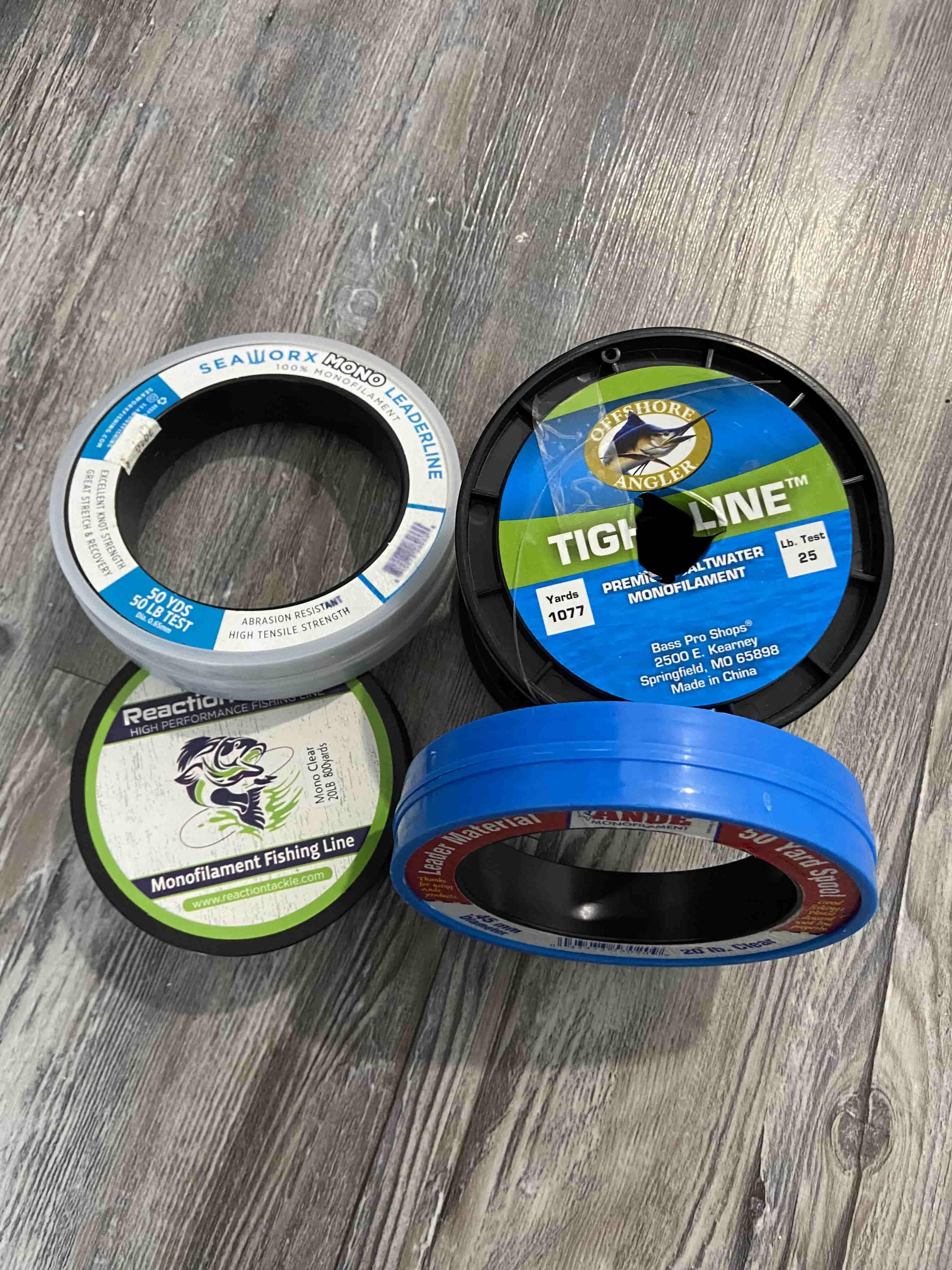
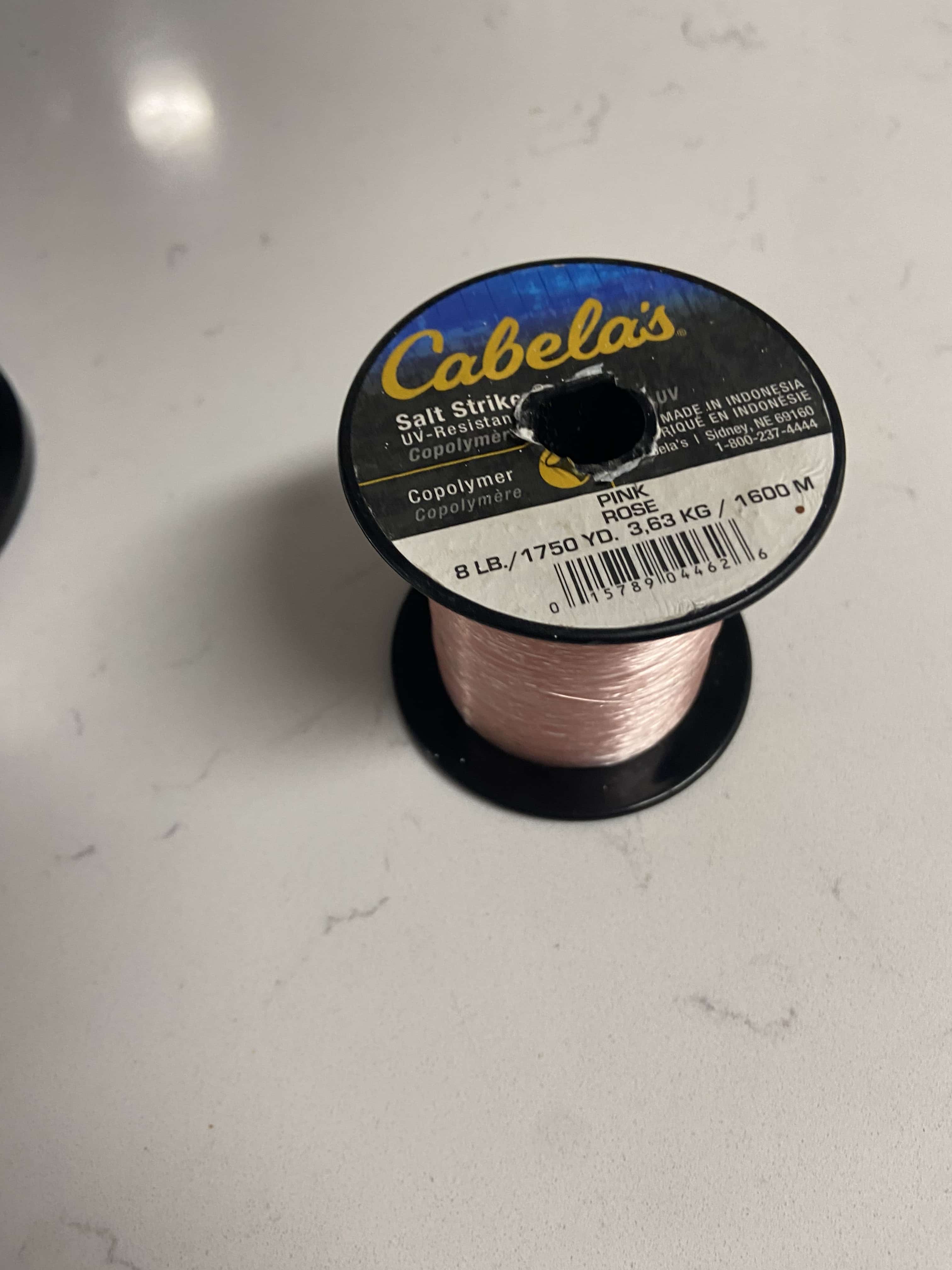
Pros: The monofilament fishing line is popular among saltwater anglers. Some of the reasons for this include its stretch. Mono can stretch a bit, giving you more forgiveness and allowing for fewer hook pullouts. It’s also cheaper than the other options for the line. Mono is also very visible and can be seen clearly, even far away. Tying knots with mono is also easier, and they don’t tend to slip quite as much.
Cons: Believe it or not, the characteristic stretch of mono can also be a con because it can stretch when you don’t want it to, such as when you are trying to quickly pull fish off the bottom. Additionally, mono has less abrasion resistance and more memory than both braid and fluoro. Lastly, monofilament has a shorter lifespan due to its weakness against UV.
Best Uses: In my experience, live bait trolling offshore is one of the best uses for monofilament fishing lines. Sometimes, you need the forgiveness that the extra stretch offers so that you don’t pull a hook out of a soft mouth. This is also true for trolling in general, which often comes with quick and hard strikes. Mono can be ideal for topwater fishing because the line floats. This means the line does not impede the topwater lure. Lastly, monofilaments’ high visibility is helpful when running multiple lines, which allows you to see them more easily.
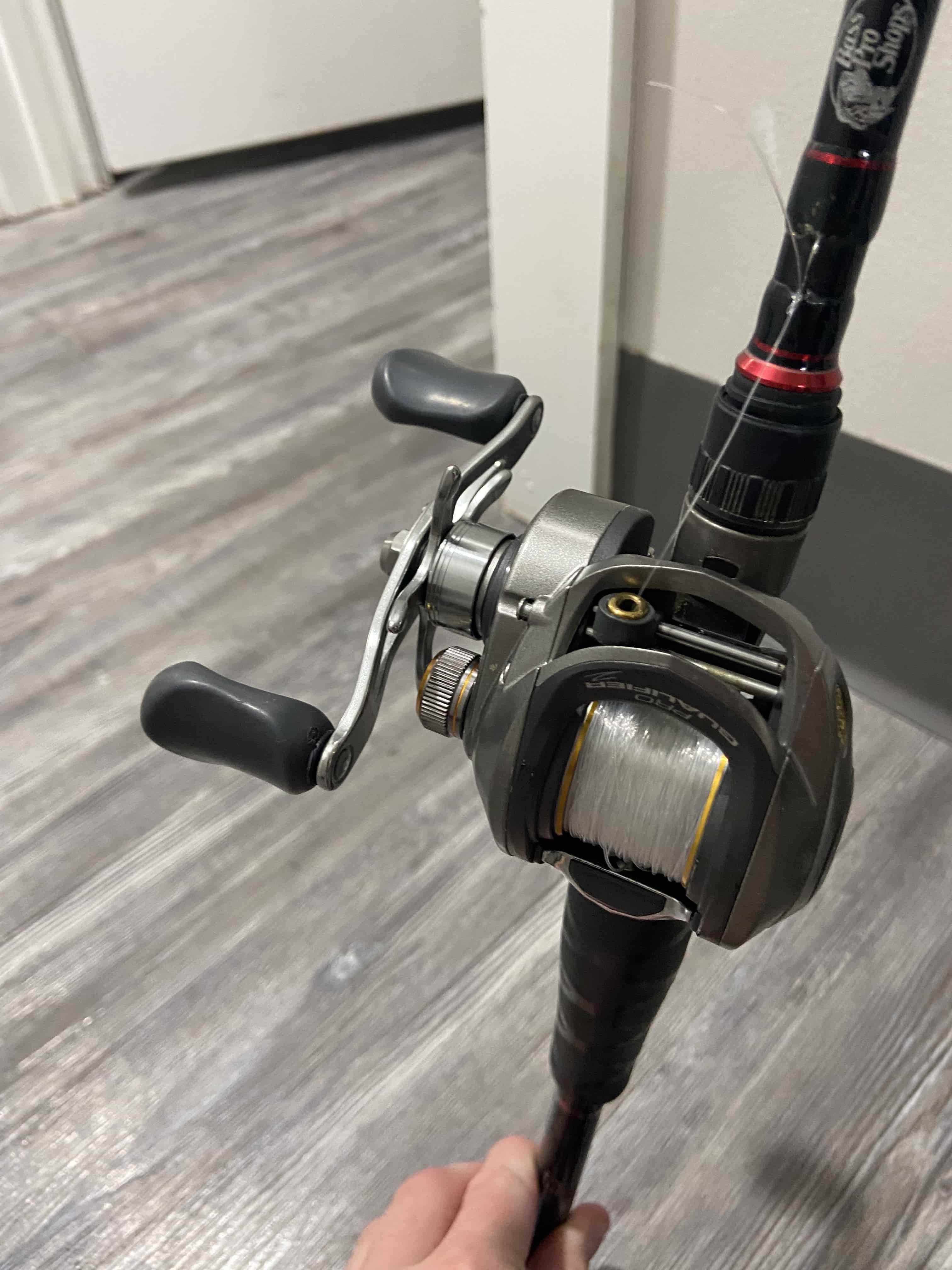
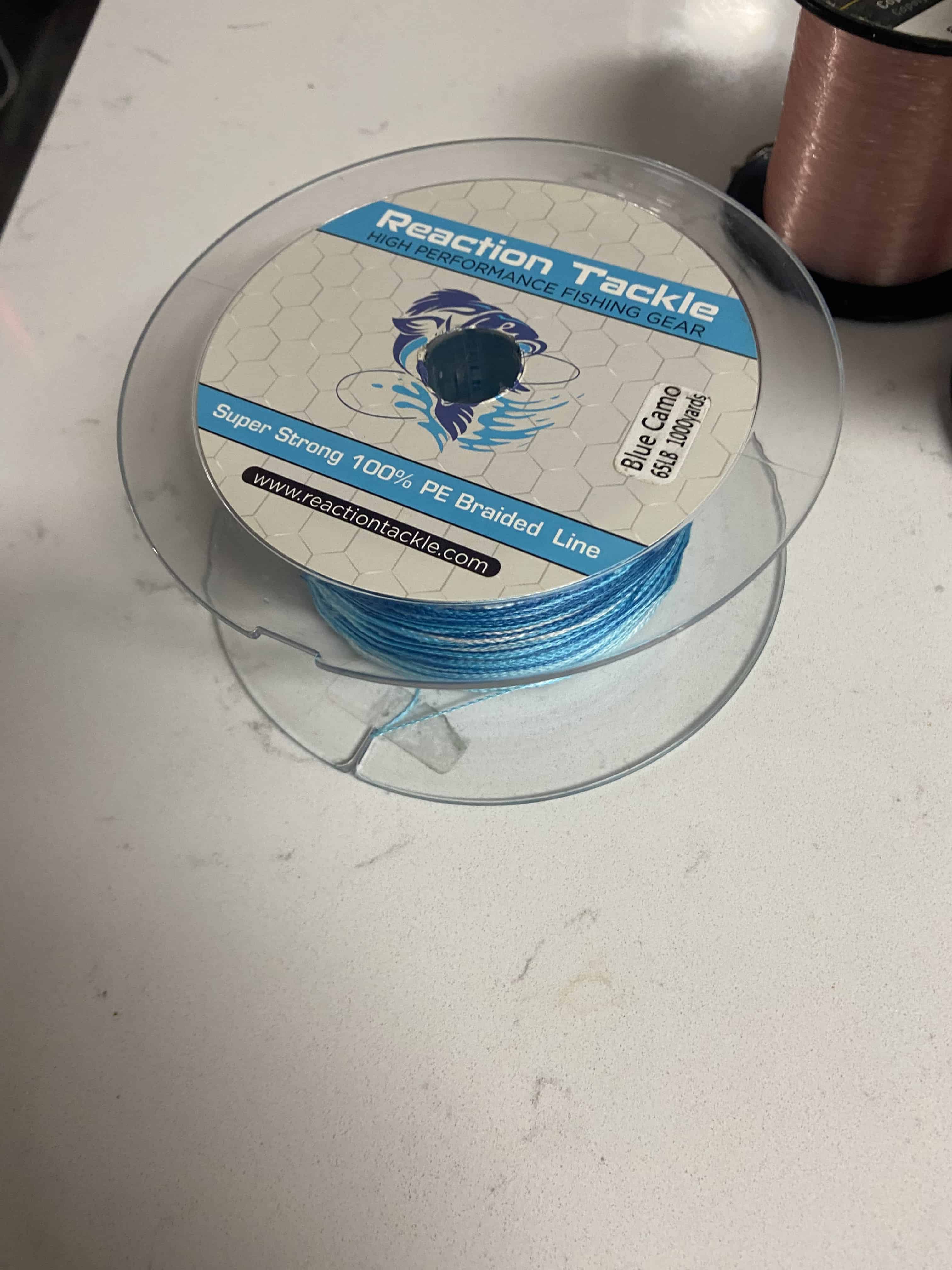
Pros: Another hugely popular fishing line and the fishing line that I generally prefer for almost all saltwater applications. First off, the braid has very little stretch at all. While less forgiving, it gives the fish no extra ground other than the drag you have applied. Second, the braid has good abrasion resistance and can chafe a little bit before giving way completely. Third, braids have virtually no memory at all. Fourth, the strength-to-diameter ratio on the braid is far higher than any other line. Basically, I’m saying that the same-strength monofilament will be significantly thicker than the braid, which is not ideal for packing a ton of line on reels (if filling with mono). Lastly, the braid is very UV resistant, which makes it great for longevity.
Cons: Braid is great, but it also has some downsides. First, the braid is fairly visible underwater, which is not optimal. Second, it’s more expensive than mono, which can add up if you have a bigger reel. Third and by far my biggest con is the fact that it can wind knot and get tangled on the reel fairly easily.
Best Uses: Braid is very good when fishing cover, but you might sometimes need to yank your line out of it. Additionally, braid is great for grouper fishing because it doesn’t stretch, meaning the fish can’t get any extra ground on you other than what your drag allows. It is amazing when paired with a fluorocarbon leader.
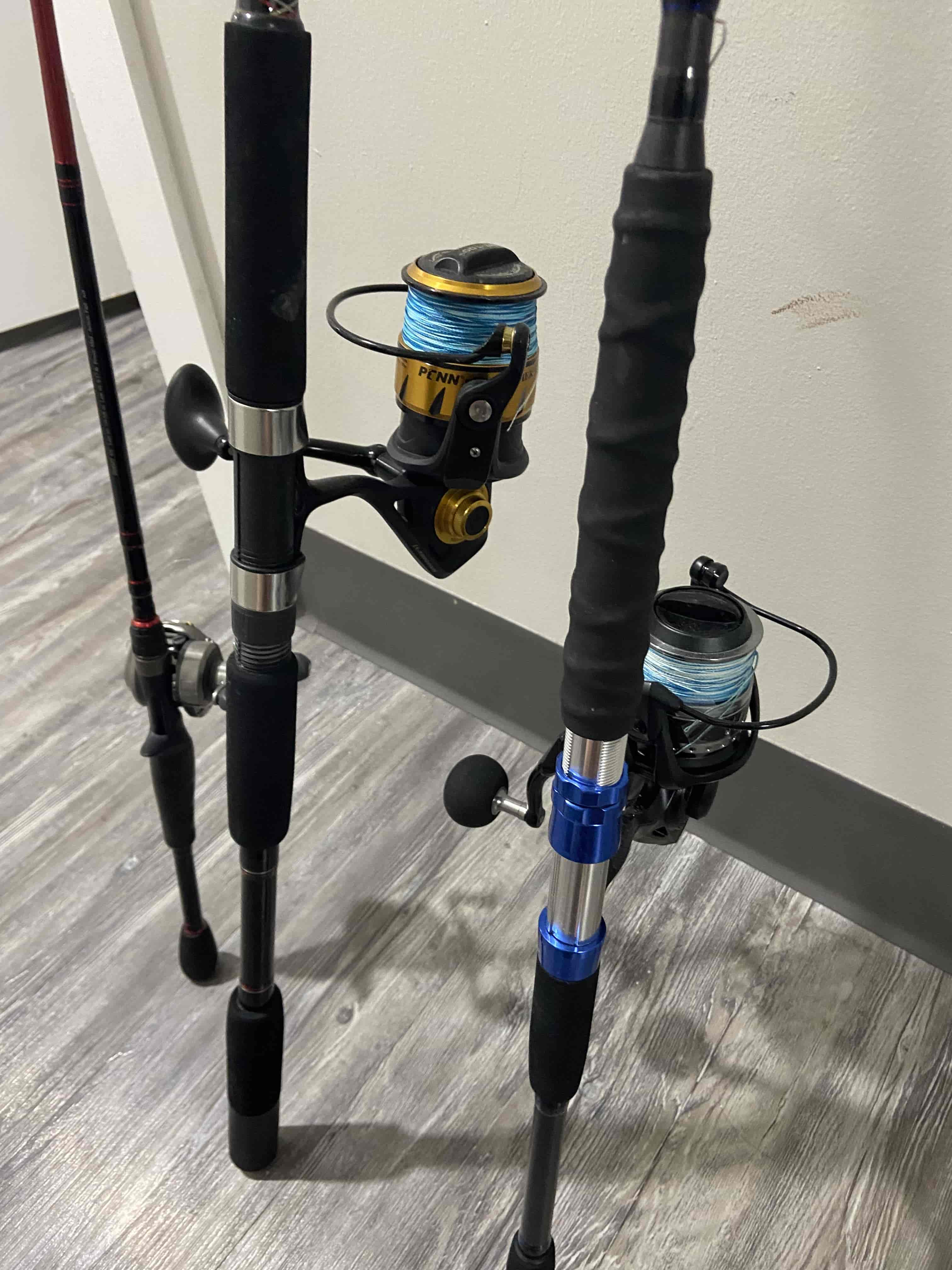
Pros: As you expect from the highest-end fishing line, fluorocarbon has some great pros. First, it is nearly impossible to see when underwater, making it great for stealth or finicky fish. Second, it has very high abrasion resistance. Third, it has great UV resistance and can last longer than mono and braid. Fourth, it is a very sensitive line. Lastly, fluorocarbon is a great choice for leaders.
Cons: While fluorocarbon is great, it also has some cons. First, it does have a bit of memory. Second, it is by far the most expensive of the three lines that we have talked about thus far. Lastly, it can get hard and brittle over time. It will retain most of its strength, but some action will be taken away.
Best Uses: Fluorocarbon is a great choice for leader material as it combines the best of both worlds. I generally tie a fluorocarbon leader onto a braid mainline to optimize stealth, strength, and line capacity. Fluoro is also ideal for stealth applications or when fish are finicky because it is very hard to see underwater.
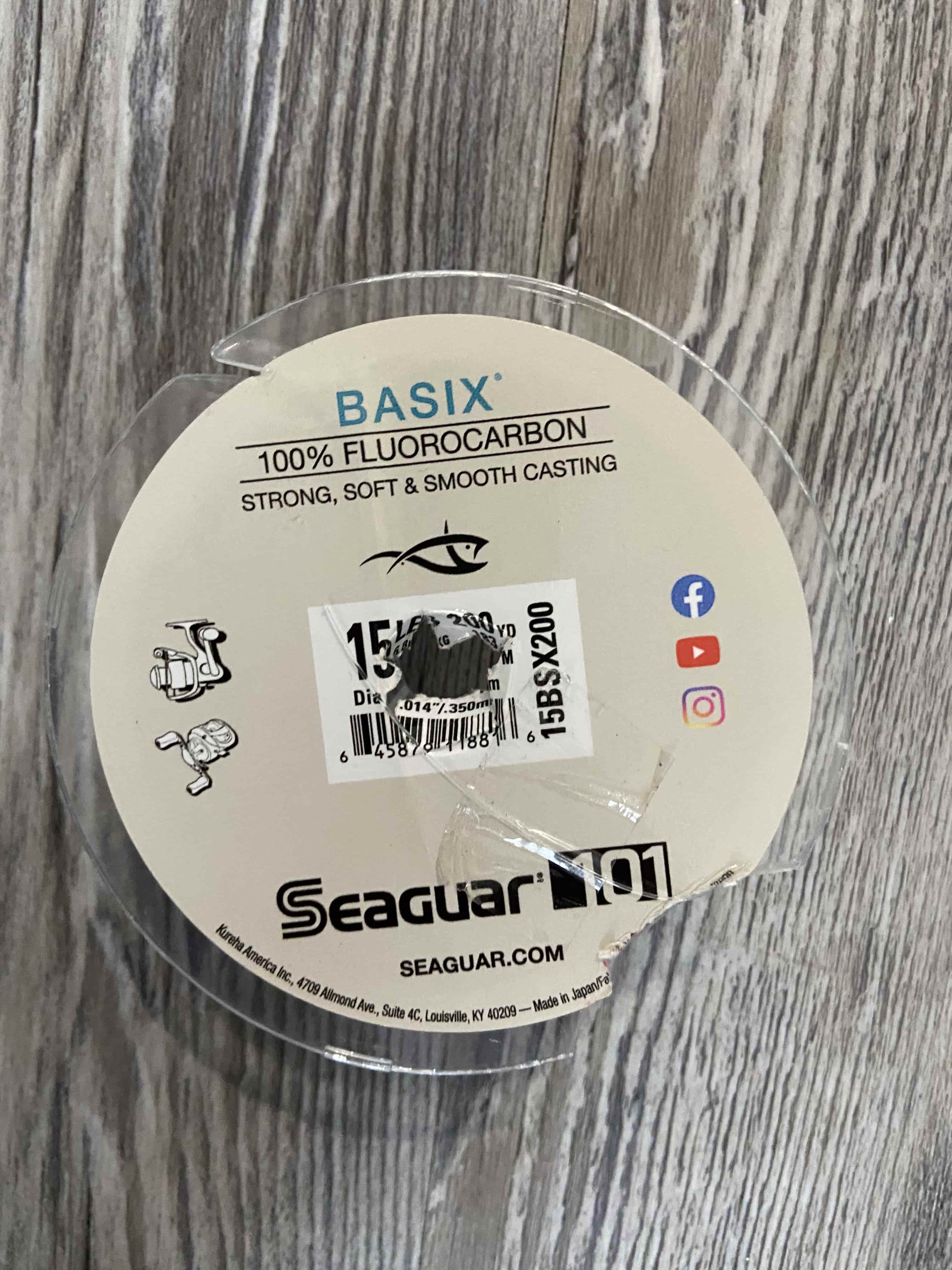
I created a visual for all visual learners reading this article. It summarizes all the pros and cons from above and puts them in an easy-to-follow table.
| Characteristic: | Monofilament | Braid | Fluorocarbon |
| Stretch | High – good shock absorption | Very low – high sensitivity | Low – better sensitivity than mono |
| Abrasion Resistance | Moderate – can wear quickly in saltwater | High – strong against rocks and coral | Very high – excellent around structure |
| Water Absorption | Absorbs water – weakens over time | Does not absorb water | Minimal water absorption |
| UV Resistance | Degrades quickly with UV exposure | Excellent resistance | Excellent resistance |
| Buoyancy | Floats – ideal for topwater | Floats – good for various applications | Sinks – better for deep-water or stealth |
| Visibility Underwater | High – easily seen | Moderate – usually visible | Low – nearly invisible underwater |
| Line Memory | High – coils and tangles easily | Very low – minimal memory | Moderate – some memory |
| Knot Strength | Good – easy to tie and holds well | Good – requires proper knots | Can be tricky – lubricate and cinch slowly |
| Sensitivity | Low – stretch dampens feel | Excellent – great bite detection | Good – better than mono |
| Durability/Longevity | Lower – needs more frequent replacement | Very high – lasts long | High – durable in harsh environments |
| Cost | Low – budget-friendly | Moderate to high | High – most expensive |
| Best Uses | Topwater, trolling, beginners | Deep water, heavy cover, long casts | Leader material, finesse, clear water |
When debating what lines to buy, one of the most important things you need to consider is the type of fishing you are doing. Each type of fishing below requires different things and tactics that may influence your line choice. In this section, I plan on teaching you risk assessment and how that plays into line choice.
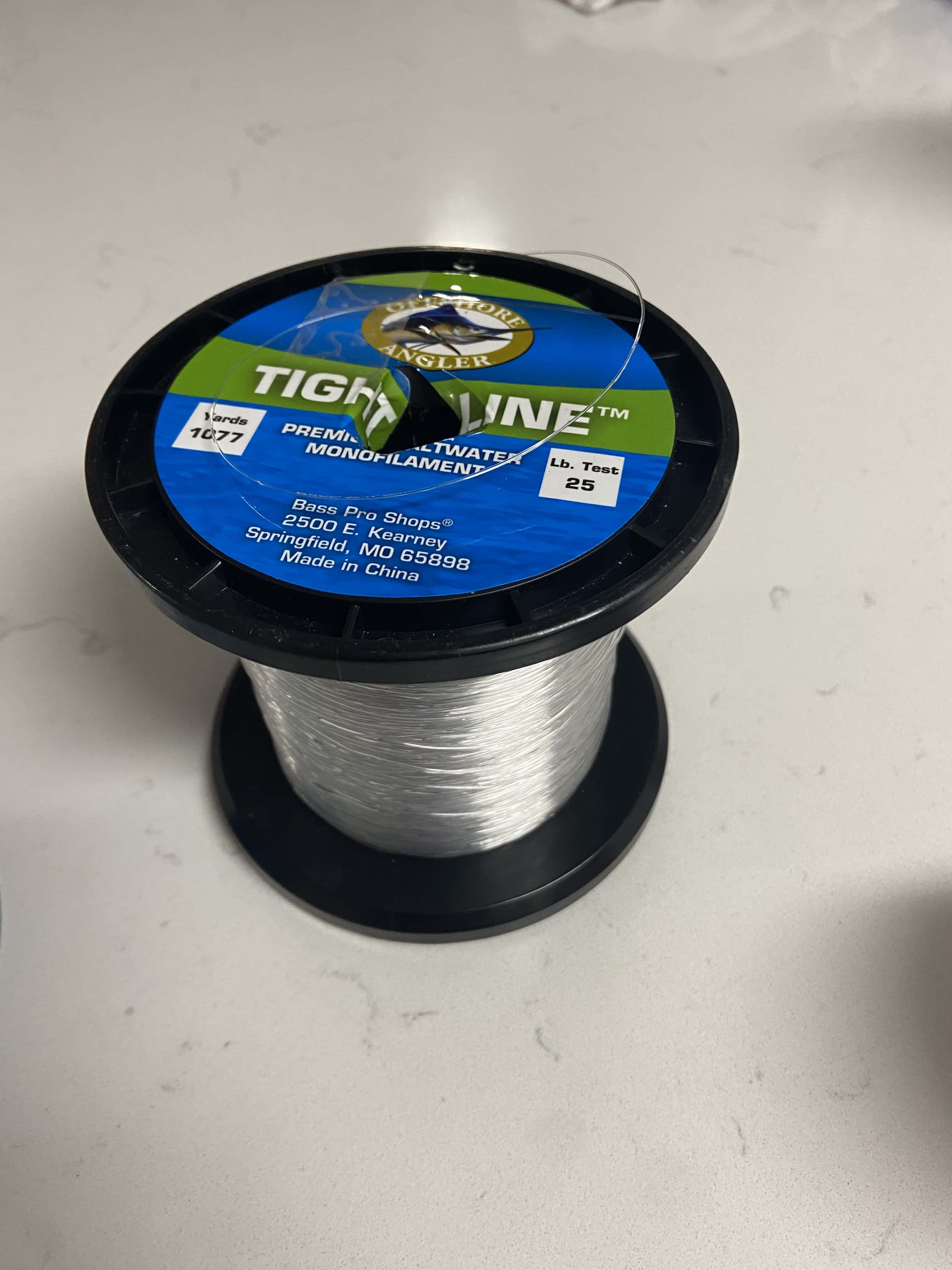
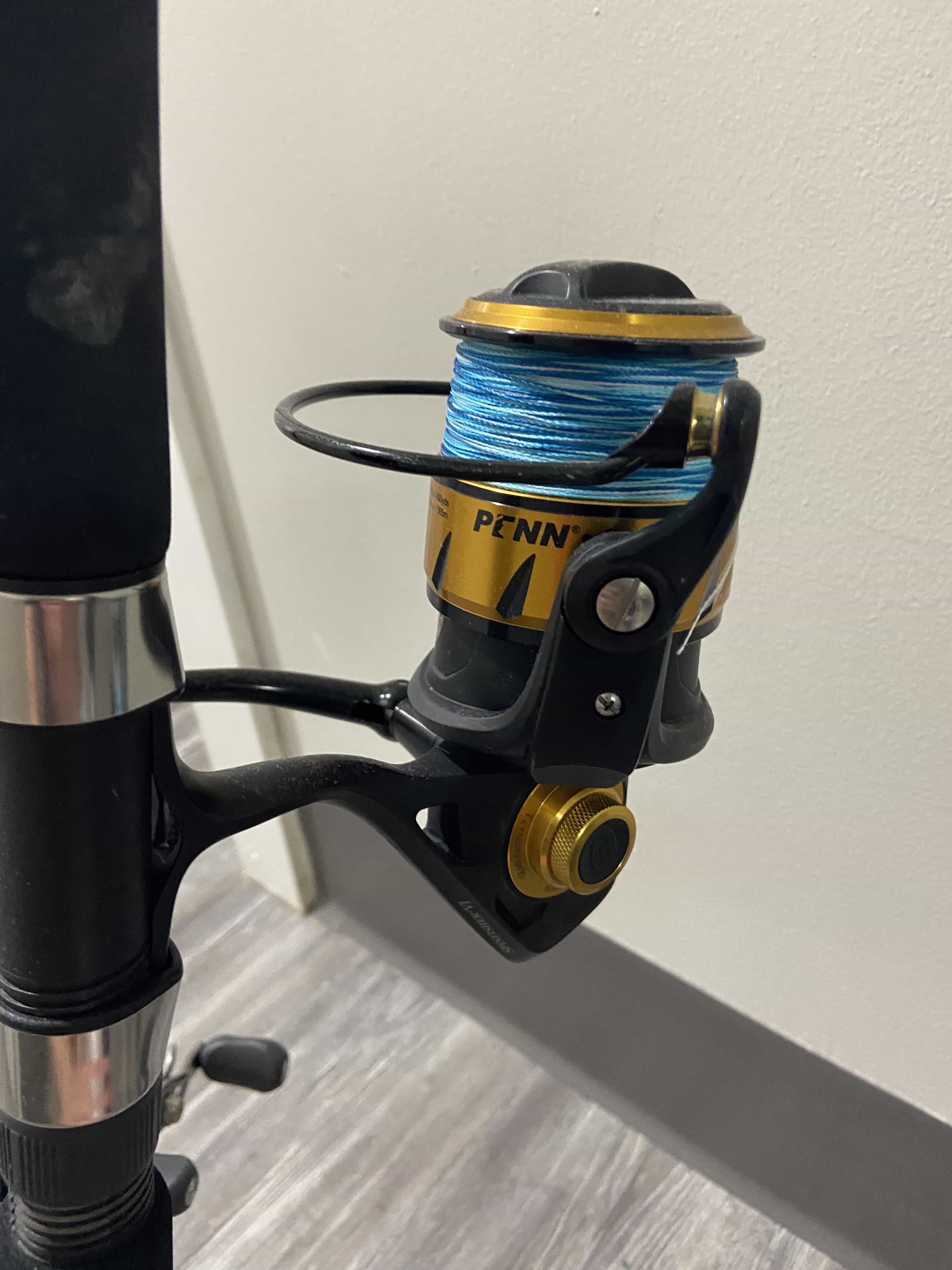
Another important factor to consider when deciding on what line to use is the fish that you are targeting. Plan accordingly.
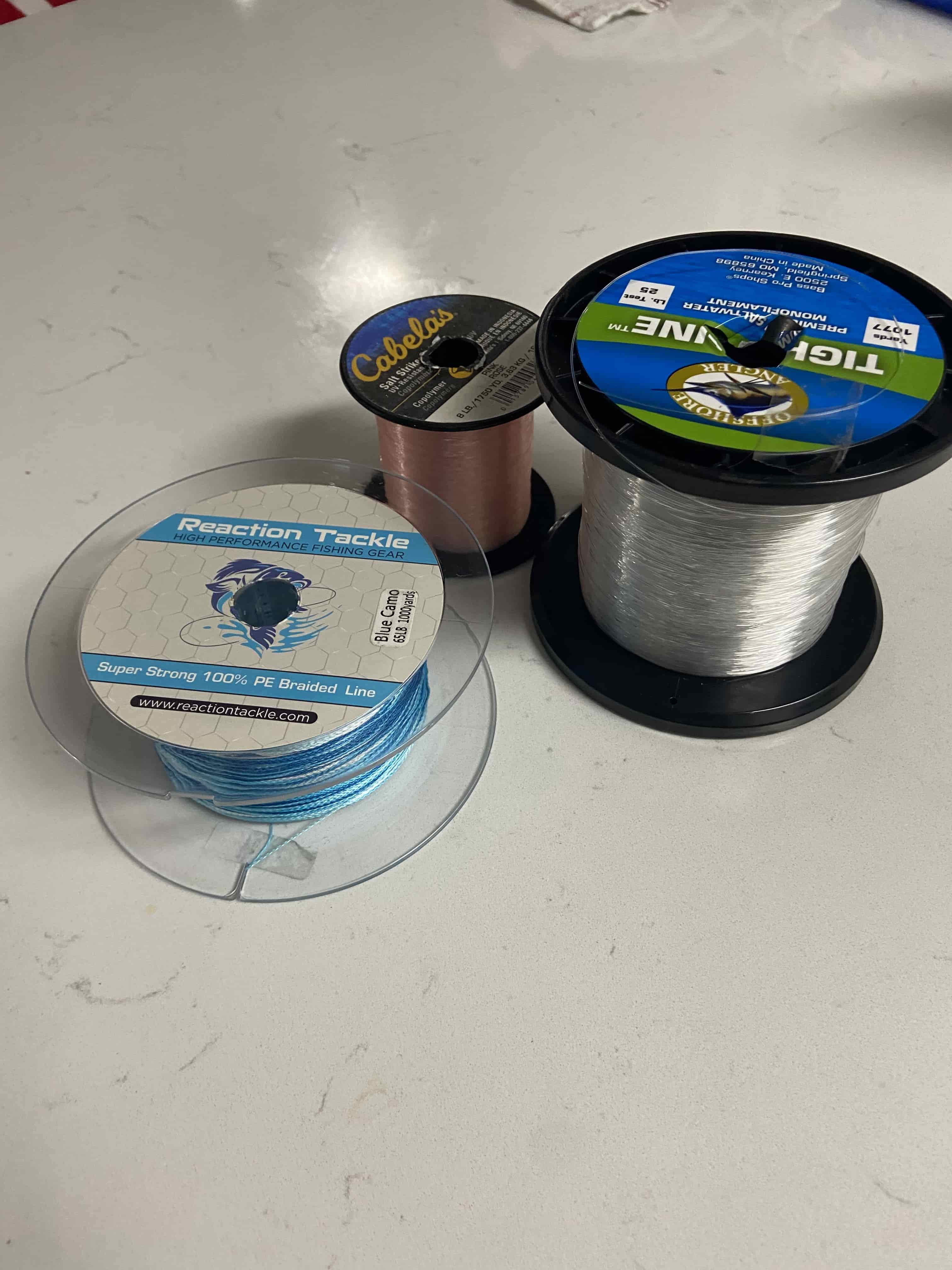
Another huge factor is picking the best saltwater fishing line. Obviously, the line strengths across the different types of lines are the same, but how do you know how heavy your line should be? This is where I would encourage you to research your target species and ask more experienced fishermen—they will be happy to help you. For my purposes, I run a 20–25-pound braid when fishing inshore and nearshore, and I switch to a 65-pound braid when fishing offshore—especially when bottom fishing.
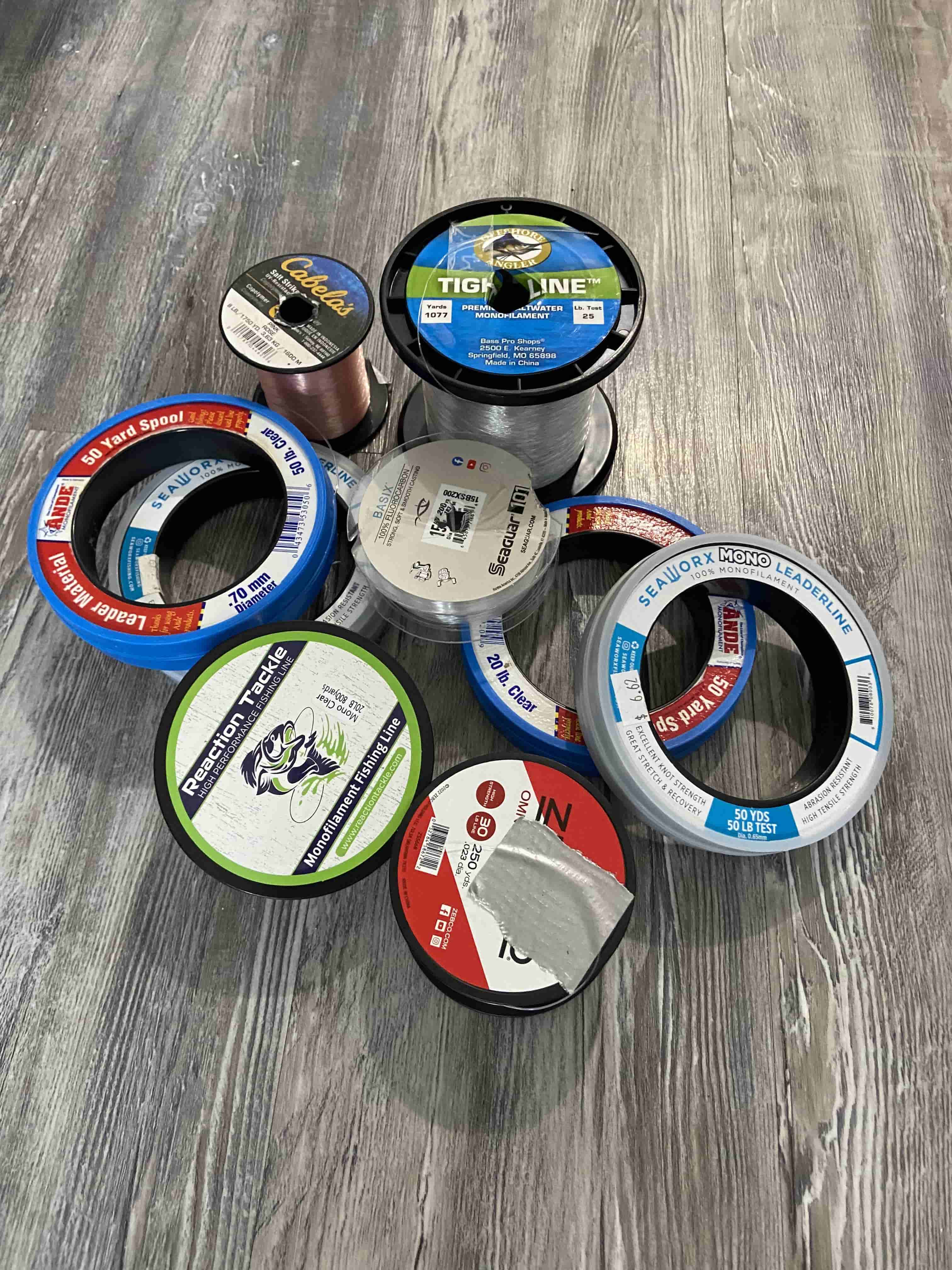
Water clarity is another big factor; however, this issue is far less complex than the others. The clearer the water, the easier the fish can see your line. If the water is murkier, what line you use doesn’t matter much. If the water is very clear—it very much matters. When the water is clear, I would highly recommend at least a fluorocarbon leader, as it is very hard to see in the water.
One of the last things you need to check is if your line is compatible with your reel and rod. Most rods and reels have the line weights on them; if not, go online to ensure you are using recommended lines on the reels and rods. These aren’t stupid suggestions; they are there so you know where the reel is most optimized and what kind of line.
Line strength is extremely important, as I just touched on. Yes, you can land fish on a lighter line than recommended. People do this all the time, on purpose, to break records and prove their skill in light tackle. This is great, but I’m trying to get the fish in as safely and quickly as possible.
There are times for light tackle, but at the end of the day, light tackle may not be the best move regarding the greatest chance to land that trophy fish.
Line strength, line capacity, and depth capability are other important considerations. You must have the capacity on your reel to stand against the fish.
If that fish runs 300 yards away, you must have enough line to where you don’t get completely schooled.
Always keep your reel capacity in mind and plan accordingly.
When bigger fish offshore smoke one of your baits, they can easily hit it so hard that the drag doesn’t go off immediately. This is precisely why no one ever really fishes straight braid to hook.
Sometimes, you need a bit of stretch when these fish hit to prevent a hook from immediately pulling or the line from even breaking. This being said, running a fluorocarbon or even monofilament leader can be vastly beneficial if a monster strikes.
Always run some sort of leader—trust me on this one.
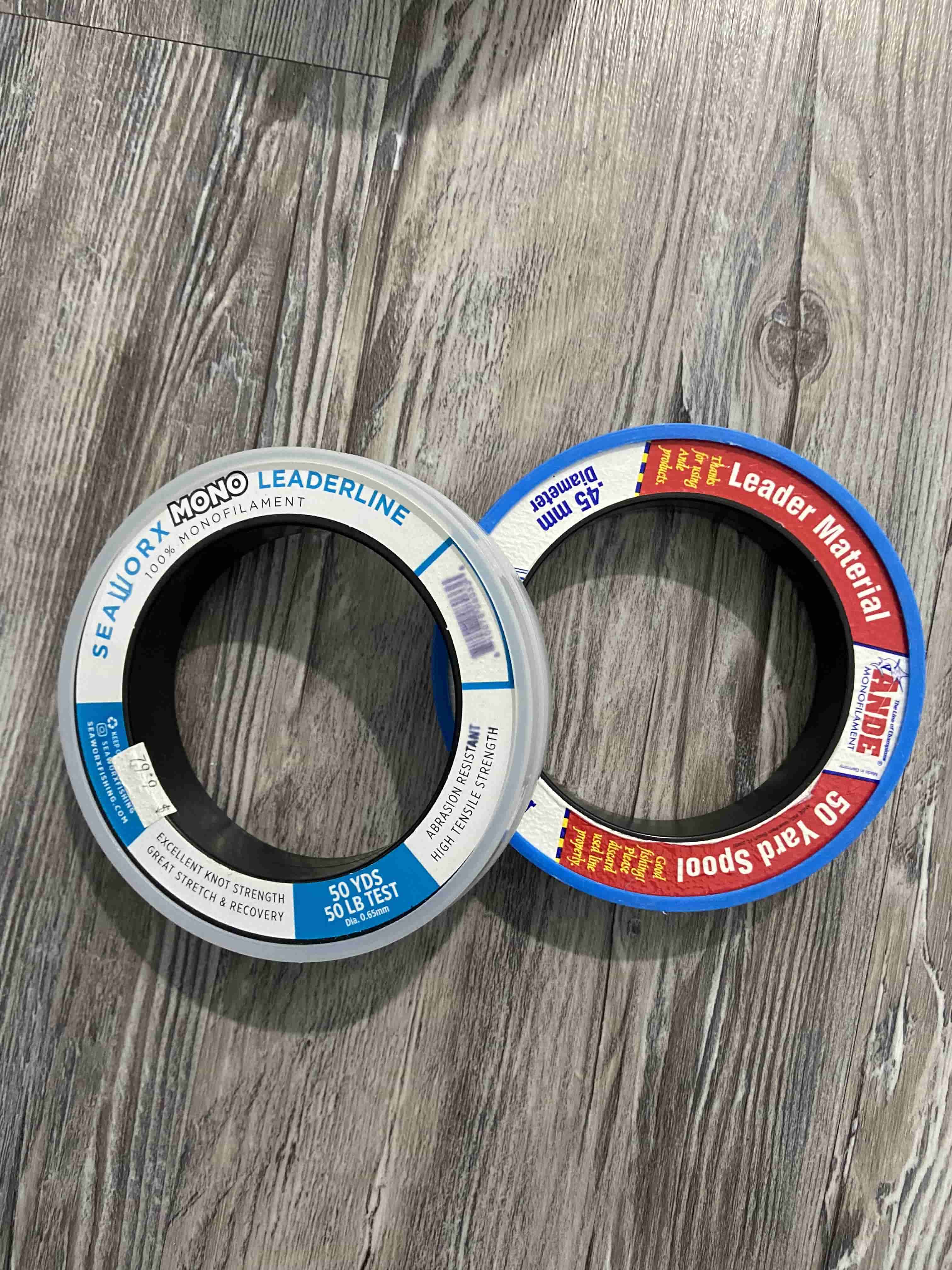
As I just mentioned, having some kind of leader is vastly important for any deep-sea setup. Past that, it’s totally up to preference.
For my best setup, I will almost always spool my reel with an entire braid and then connect that to a fluorocarbon leader with a double-uni knot.
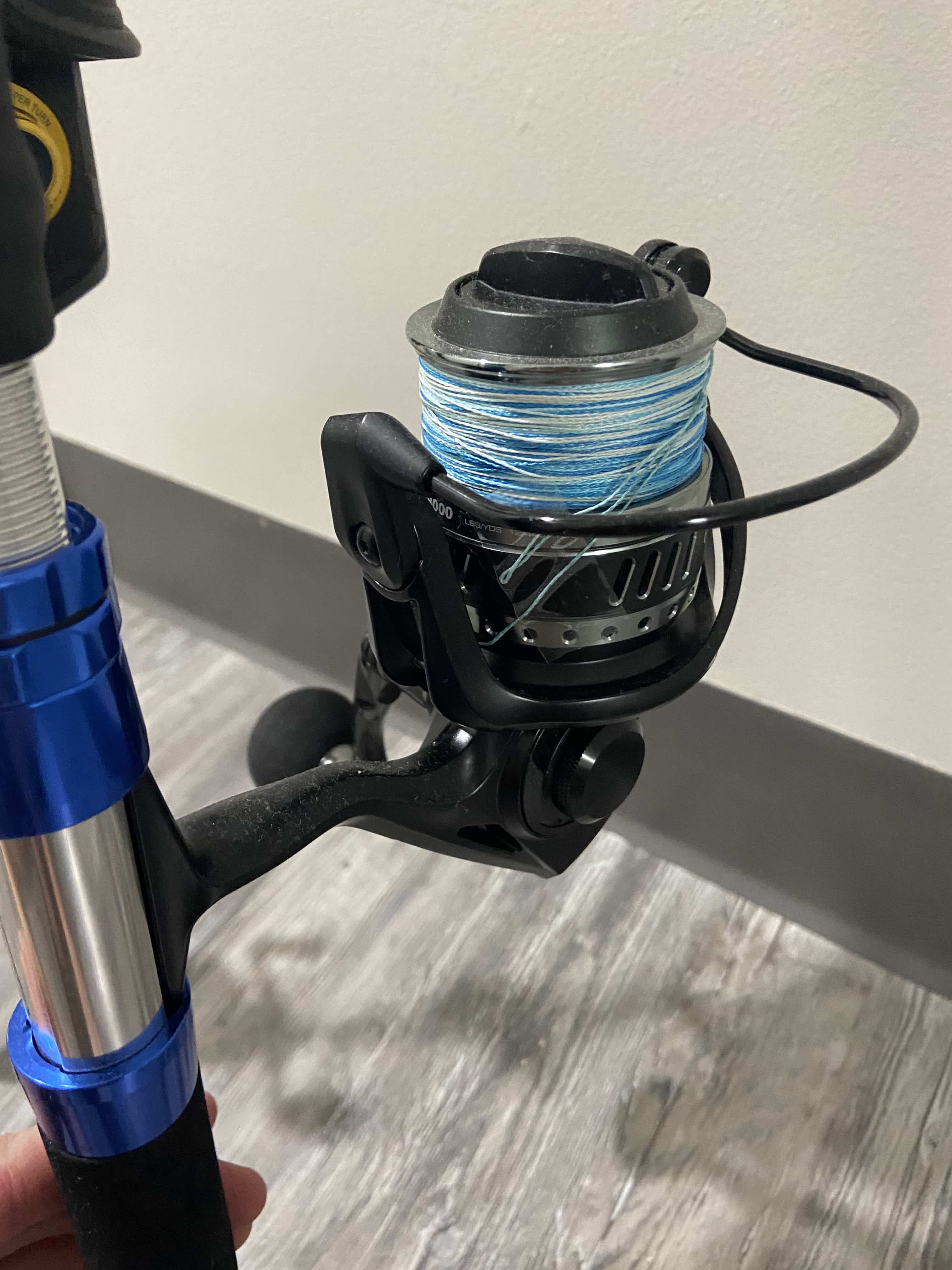
That way, I get high abrasion resistance, high sensitivity, high reel capacity, a little stretch, and stealth.
While this may not be the cheapest option, I find it the most effective.
Honestly, there are only a few tips I can give you guys to help with line maintenance and spooling.
First, when spooling your line, be sure that the line has a good bit of tension and is tight. If you do this, you can fit more lines on the spool and have less risk of wind knots and tangles.
For line maintenance, I highly recommend changing your line every year or two, and then every single time you fish, you need to wash off your spools to keep the saltwater off of them.
Lastly, I recommend keeping your line out of direct sunlight as much as possible to prevent UV damage.
Every time you go fishing, it is imperative that you rinse your rods and reels and line off after using them.
If you don’t, saltwater and salt will cling to the line and degrade its quality even faster than it normally would.
There’s no great way to clean your lines, but soap your spools and reels after using them all day is never a bad idea.
When storing your lines, keep them away from moisture and salt air if you can, as this will corrode the line. Instead, I recommend keeping them indoors or in a closed space where the line won’t degrade as quickly.
Over time, fishing lines will inevitably lose their strength. Sometimes, this is very easy to tell, as you can break heavier-weight lines with your hands. Other times, it may look or feel like there’s no difference. If you notice the line weakening, you should replace it immediately.
Even if you don’t notice any obvious signs, I recommend changing your line every year or two, depending on how much it was used. It’s also not uncommon to replace your line multiple times yearly due to wear and tear.
When replacing your line, you have three options: The first and safest option is to take your reel to a tackle shop and have them spool it for you. The second option is to purchase your reel-spooling device. The third is the DIY route—grab a pencil and a friend to hold the spool.
The trick with this method is to maintain consistent tension on the line while reeling. This helps prevent tangles and wind knots later on.
If you’re spooling your reel at home without a machine, I recommend mounting your reel on your rod first. Then, thread the line through the rod’s guides toward the reel. From there, open the bail if you’re using a spinning reel, tie the line around the spool, close the bail, and begin reeling to fill your spool.
Read also: The Complete Guide to Types of Fishing Reels
This is sort of a trick question. With both monofilament and fluorocarbon, you will inevitably have some line memory just from the line on the spool, and there’s not much you can do about it.
However, I highly recommend spooling your line as tightly as possible to prevent tangles. These knots happen because the line is loose on the spool, and some of it falls off when you cast.
That loose line gets caught up with the line flying off the reel. Spool the reel with tension, and you’ll be fine.
This won’t completely prevent wind knots, but it will help substantially.
There are no “freshwater” or “saltwater” fishing lines. Rather, there is just a fishing line as a whole. Now, this line is often used in certain settings where you could say that it’s used in saltwater more than freshwater or vice versa, but at the end of the day, it’s still the same fishing line regardless of where it lands in the water. Companies can specialize in making some lines more UV or saltwater-resistant for saltwater, but as a broad category, no such thing as freshwater or saltwater lines exists.
At the end of the day, I believe the best line for saltwater fishing is a braid mainline connected to a fluorocarbon leader. This gives you all the benefits you should ever need and expect from line; the only downside is the price you will pay. However, I would argue that this price is worth it for the tradeoff you get in performance.
I believe braid is the better mainline mostly because of its capacity. When saltwater fishing, you never know what you can catch, so it is always better to be prepared and have enough capacity to take a decent run. Braid optimizes strength, capacity, and size, all while giving no ground to the fish through the stretch. Additionally, you get better casting distance.
The short answer: it shouldn’t. You should always be using some sort of leader. If you aren’t using a leader, I’m positive the line’s color would matter because fish could see a neon green far more easily than an ocean blue color in the water. The line’s color shouldn’t matter, but it can if you are not using a leader.
If you’re a beginner at saltwater fishing, I would go with monofilament. It is the cheapest of the lines and offers the most forgiveness, which is great for new saltwater anglers.
As you can hopefully tell after reading this article, choosing the right fishing line when fishing in saltwater is hugely important. The right line can distinguish between a great fishing day and a heartbreaking one. I hope you have enjoyed learning about one of the most important topics in fishing. Feel free to ask any questions, and I look forward to hearing what you guys think of this article. As always, good luck and tight lines!
Pierce Latta has been passionate about fishing since the age of three, growing up casting lines in both freshwater ponds around Charlotte, NC, and the saltwater of Ocean Isle Beach. With nearly 16 years of experience, he’s explored almost every style of fishing imaginable, from fly fishing and surf casting to offshore and inshore adventures. Pierce now shares his knowledge and enthusiasm with others, offering tips, techniques, and inspiration to help anglers of all levels discover the thrill of fishing.

![Where and How to Catch Live Bait for Saltwater Fishing [Expert Guide]](https://imgcdn.fishbox.com/wp-blog/wp-content/uploads/2024/03/spanish-mackerel-fishing-pierce-latta-scaled-1-1.jpg)