
Any question about the article?
Please use your work e-mail, so we can connect with you
During the cooler winter months, when the fish leave their deep water hangouts and start looking for warmer waters, the Brisbane River comes to life with excellent angling opportunities, but you wouldn’t know it just by looking at it.
But it’s not just winter when the fishing in the Brisbane River is good. This year-round fishing location is a prime opportunity for shore-based anglers and kayakers to get amongst some of the best fishing action in Brisbane, Queensland.
In the following Guide to Brisbane River Fishing: Best Spots, Species, and Tips, we’ll cover:
If you’ve been dreaming of a destination winter fishing adventure, check out The Ultimate Guide to the Best Winter Fishing Destinations, where we discuss everything you need to know about the USA’s best winter fishing destinations.
Fishbox App is a premium Fishing Forecasting app that gives you access to advanced technology, including the best time to go fishing in New South Wales and when you’re better off relaxing at home with a good book or cleaning out your tackle box.
If you have access to a small boat or kayak, the world is your oyster, and the fishing opportunities on the Brisbane River have really started to open up. Some of the best locations include:
While you can catch a whole range of fish species in the Brisbane River, some are more prevalent than others. In the section below, we’ll cover some of the most popular fish species anglers can expect to catch if they’re fishing in the river.
Threadfin Salmon are a predatory fish with a large array of whiskers, which allow them to hunt in water that has low visibility. Because of this, it’s not uncommon to catch a Threadfin Salmon right up close to the shore in shallow water. The best time to target Threadfin Salmon in the Brisbane River is in autumn and winter. Try fishing around structures to increase your chances of catching one of these fish.
Jewfish, or Mulloway as they’re sometimes known, are a large fish species in Australia that hang around in both freshwater and saltwater, making them a prime target species in large coastal rivers such as the Brisbane River. Primarily a night species, the best time to target these fish is late at night, close to the structure, but if you’re planning on landing one of these monsters, make sure that your gear is up to the challenge!
Mangrove Jacks prefer warm water, so the hot summer months are a prime time to target a large Jack in the Brisbane River. They’re predatory or ambush fish, so casting lures close to the structure is the best approach if you want to hook one. Despite being highly aggressive, they can be particular about hitting a lure, so don’t be surprised if you fish one area a few times or a specific snag before getting a strike.
Bream is a popular river and estuary fish around coastal areas in Australia, preferring to live close to structures such as underwater logs, ledges, rocks, jetties, wharves, and piers. While they used to be primarily caught on bait in the evening or early morning, their slow take and careful approach to bait made them quite challenging. However, over the last decade, anglers have switched to using lures and soft plastics, where Bream’s timid bite is replaced by a quick strike and powerful dash for the closest snag.
Flathead can be found up and down the coast of Australia, along beaches, bays, rivers, and estuaries, so it’s no surprise that you can catch a Flathead in the Brisbane River. Flatheads prefer sandy bottoms, sometimes close to weed patches, but they typically use their flat profile and camouflage to hide on the bottom. At high tides, Flathead pushes up close to shore but can be caught normally year-round in deeper water either using bait or soft plastics.
Australian bass is a freshwater species and can typically be found in the stretches of the Brisbane River, where large amounts of freshwater are present. They’re typically a lot more active during the Spring season when fresh water in the river is at its peak. If you want to target Australian bass, a light spinning rod and reel with lures is the most effective method.
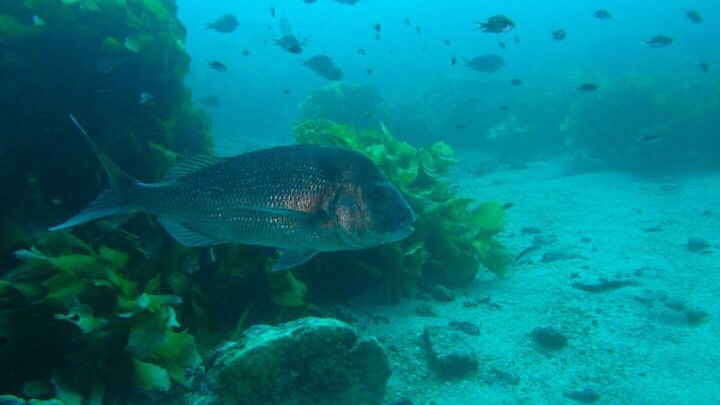
When the water is cooler during the winter months, bigger Snapper will begin to push up into the Brisbane River in larger numbers. Strip fish baits and whole fish, which are fished on the bottom, are effective baits, along with soft plastic bounced along the bottom. The best place to target Snapper in the Brisbane River is around the Port area, where the water is a lot deeper, but you’ll also need to deal with a lot more boat traffic.
In this section, we’re going to cover the different seasons for fishing in the Brisbane River and focus on what species you’re most likely to catch. It’s essential to note that while your chances of catching specific species are better in specific seasons, water and weather changes are often slow to take effect, and some fish species are present a lot longer than just the months of the season, although available in lower numbers or a little more challenging to catch.
As the weather starts getting warmer during spring, fish start becoming more active up and down the river, and it’s also normally the lowest rainfall period of the year, which means water clarity is at its peak. Food sources in spring, such as small prawns and baitfish, are on the move, and large Australian Bass will start working their way back down the river along with larger Jewfish and Threadfin Salmon of the night.
Although it’s getting warmer, you’re also seeing a lot more rain during this period, which means the river water will become cloudier. As the water gets muddier, fish will move downstream towards the mouth of the river area, closer to the Gateway Bridge and the Port area. Incoming tides push saltwater into the river, and larger predatory fish will actively hunt baitfish in the layers of freshwater and saltwater.
The water is starting to clear up during this transition period, and fish like Mangrove Jack will actively start hunting along with large Jewfish and Threadfin Salmon, taking advantage of the low water visibility to move around in open water. Try fishing around structures, with late afternoon, evening, and night being exceptionally good, especially if you can find an area with lighting that attracts baitfish.
While winter weather typically shuts down a lot of angling in other states, thanks to warmer winter temperatures, Brisbane angling is a great time for anglers. Large Snapper are starting to arrive around the Port area, along with Jewfish and Threadfin Salmon, and the occasional late season Mangrove Jack.
What are the best baits and lures for fishing in the Brisbane River? Let’s take a look.
The first thing to consider when you’re planning on fishing the Brisbane River is what type of fishing you’re planning on doing, bait fishing or spinning with soft plastics and lures. Either way, the ability to cast is essential, so an all-round spinning rod and reel combo will give you the most advantage as you make your way up and down the Brisbane River from location to location.
A 6 to 10 kg fishing rod, with around 10 kg / 20 lb. braided line, will do you well. While it may be a little on the heavier side for the average fish, should something bigger come along, you’re going to have a much better chance of landing it.
For lure selection, small vibration or shaker lures will work well, especially when the water is a little cloudy, along with brightly colored soft plastics, spinning lures, spoons, and minnow lures.
If you prefer bait, most strip baits, along with Mullet, Banana Prawns, Pike, Herring, or Sardines, will work well. Generally, local anglers practice catch and release when fishing in the Brisbane River, and there haven’t been a lot of negative health advisories. It’s probably best to avoid species such as bottom feeders and crabs that absorb larger amounts of heavy metals.
There you go! Everything you ever wanted to know about fishing in the Brisbane River, including the best spots, local fish species, tips, tricks, and much more.
Before you drop a line in Brisbane, Queensland, regardless of whether you’re fishing in the river or off the beach, be sure to check out the local season, size, and bag limits, along with any licensing requirements. By following local angling rules, we can all do our part to ensure that future anglers can enjoy the fantastic fishing opportunities we enjoy today.
The premium fish forecasting application, Fishbox App, will put you in the perfect position to catch some great fish by analyzing local weather and water conditions and input from local anglers. The Fishbox App utilizes accurate weather, tide, and fishing conditions to predict the best time to get out on the water to catch your target species.
Do you have some top river fishing spots in Brisbane, or do you have advice you’d like to share with other anglers? Drop a comment below! We love hearing your thoughts and feedback, and we’re sure new anglers will appreciate it.