
Any question about the article?
Please use your work e-mail, so we can connect with you
When the conversation turns to where to go bass fishing, New Jersey isn’t the first state that comes to mind.
Yet about an hour’s drive from New York City, New Jersey offers some outstanding lakes and reservoirs that yield consistently solid numbers of largemouth and smallmouth bass, thanks to stocking efforts and catch-and-release regulations.
Several guides and professional bass anglers told Fishbox that the reason the state is often overlooked as a bass fishing destination is that there are no national tournament stops in the state. Instead, there is plenty of local and regional competition.
Additionally, the bass caught in New Jersey—largemouths in the 4-5 lbs. range and smallmouths in the 3-4 lbs. range—are simply not the trophy-size fish found in Georgia, Florida, Alabama, and other southern states with longer feeding seasons and year-round forage.
Check out the Fishbox app for where to go bass fishing in New Jersey.
Seasonality plays a key role in New Jersey bass fishing. Largemouth and smallmouth bass tend to move into shallower waters to feed and spawn once the water begins to warm, making them easier to catch. This is especially true in spring and summer, but most anglers report solid results in the fall and winter as well.
We’ve found that fishing at first morning light and night during the spring and summer months often pays handsome dividends, as bass prefer to feed in cooler water temperatures and in lower light. What’s more, there are fewer anglers and watercraft on New Jersey waters during these times.
For this reason and others, it’s best to avoid fishing during the midday time periods once the mercury begins to rise.
Standard equipment for bass fishing in New Jersey includes 7-foot medium-action rods paired with a 300 series spinning reel. Most anglers lean toward 10 lbs. braided lines with 10 lbs. test fluorocarbon leaders.
The best bait choices often include plastics such as white or greenish worms for largemouths and those resembling crawfish for smallmouths. If plastics don’t yield the desired results, metallic-colored spinners often do the trick when combined with trailers. Topwater lures, such as buzz baits, are also worth a try.
In the colder months, anglers switch to live bait, typically a live minnow or shiner on a jig, to maximize their chances of hooking up.
While there are terrific bass fishing waters just a short cast from New York City stretching to the Pennsylvania state line, most of the top spots are in the North/Central part of the state in lakes and reservoirs that feature coves, piers, and bays, with plenty of underwater vegetation.
Let’s explore some of the top New Jersey bass fishing spots:
Nine-mile-long Greenwood Lake features 68.8 miles of shoreline, runs north/south across the border of New York and New Jersey, and is considered one of the best fishing spots in New Jersey. The southern (N.J.) portion is preferred by guides for largemouth bass—water depths are shallow with more vegetation—while the northern end is where smallmouth bass frequently reside (in waters almost 60 feet deep).
Greenwood Lake is New Jersey’s second-largest lake (1,918 acres) and offers some of the top largemouth and smallmouth bass fishing in the state, along with walleye, crappie, muskellunge, and panfish.
Most of the bass fishing on the lake occurs via boats, as the shoreline is largely private and residential. There are several marinas around the lake, and Brown’s Point Park in West Milford, N.J., offers shoreline fishing.
The differences in the northern and southern sections of the lake were shaped by the lake’s history. The New York section of the lake is naturally spring and creek-fed, while the New Jersey portion was created when a dam was constructed in 1836.
One interesting note about Greenwood Lake: It’s one of the few destinations in the U.S. where state fishing licenses from either bordering state (New York or New Jersey) are valid.
Read also: Complete Guide to New Jersey Fishing Licenses
Monksville Reservoir, located in the same region of New Jersey as the southern portion of Greenwood Lake within Long Pond Ironworks State Park, is a scenic reservoir that offers outstanding largemouth and smallmouth bass fishing, along with a robust walleye and trout population.
Created in 1987 by the damming of the Wanaque River in Ringwood, N.J., the 505-acre reservoir has a maximum depth of 90 feet and features subsurface structures that appeal to bass, such as extensive weed beds and brush, sunken timber, and plenty of boulders and rocks.
Some of the best bait for largemouth bass at Monksville is plastic worms or crankbaits, especially in natural colors like green and brown, while smallmouths actively seek tube jigs or a drop-shot rig with a plastic worm.
The 770-acre Manasquan Reservoir in Howell Township is part of a larger 1,200-acre site that includes a visitor’s center with a bait shop, a boat ramp, and a five-mile trail for shoreline fishing. Summer weekends tend to get crowded, so it’s best to visit on weekdays.
While bass fishing is the main draw at the reservoir, hybrid striped bass, crappie, and channel catfish are hooked regularly. The reservoir, which is 40 feet deep at its deepest point, has lots of underwater structures, and fishing along the tree lines seems to yield the best results. Only boats with electric motors are permitted on the reservoir, and they must be at least 8 feet long, along with sailboats, kayaks, and canoes. Rentals are available at the visitor’s center.
Located approximately 40 miles from New York City, the state’s largest lake is well known for offering the best bass fishing in New Jersey. It’s nine miles long, three miles wide, and covers a surface area of 2,686 acres.
The shoreline is mostly lined with houses and cabins, but there are onshore places to fish, as well as several marinas for those looking to get out on the lake in a boat.
Most anglers in Hopatcong work off the edges of weedy areas and docks near shorelines using chatter baits, spinners, jigs with soft plastics, and swimbaits. To supplement their fishing, some anglers employ front-facing sonar to locate structures where bass could be lurking, although some locals frown upon the use of the technology.
In the summer months, as water temperatures rise, the largemouth and smallmouth bass head to deeper waters during the day but feed in the shallows early morning and night.
Several guides suggested the River Styx area on the western side of the lake—with its steep drop-offs– for largemouths, along with the Bertrand’s Island area as good starting points.
The bass fishing on the lake, according to local guides, continues to improve, although summer weekends can get busy with both anglers and watercraft.
Just downstream from Lake Hopatcong and part of its watershed, Lake Musconetcong covers 329 acres but is quite shallow in most parts. In fact, the deepest part of the lake is only 10 feet deep, with most areas only reaching five feet deep.
Thanks to the shallow waters (which foster the growth of vegetation), there are few boaters on the lake. But from a bass perspective, it’s heavenly. Since sunlight easily reaches the bottom of the lake, weeds, grasses, and water lilies flourish, providing largemouth bass with plenty of cover all summer. Perch, crappie, pickerel, occasional smallmouth bass, and channel catfish are also called the lake home.
Largemouth bass caught on Lake Musconetcong typically weigh in the 2.5-3-pound range, but 5-6 pounders are also landed sporadically. Several guides add that it’s not unusual to catch eight or 10 bass in a day.
Dealing with the thick vegetation is the biggest challenge. Weedless lures are key, as many anglers use artificials/soft plastics resembling frogs or bats, along with weedless spoons and 3/8-ounce jigs to cast on the surface. Then, the trick is varying the speed of retrieval until the largemouth hits.
Read also: The Best Bait and Lures for Largemouth Bass Fishing
While the northern and central parts of the state get the most attention from New York City-area residents and visitors, South Jersey also offers plenty of opportunities.
Union Lake in Millville, N.J., for example, has become a well-known destination for largemouth and smallmouth bass fishing. It covers 898 acres, reaches a depth of 27 feet, and features lots of submerged and visible vegetation, which bass love.
Two factors have played important roles for bass anglers at the lake: The addition of a fish ladder by the lake’s dam provides gizzard shad and Alewine easy entry to the lake, along with a local program that deposits Christmas trees in the lake to create habitat for bass and other fish.
Bass fishing is typically strong around the dam and around the artificial “reefs” using medium to deep diving crankbaits, jerk baits, and plastic worms. Spinners are preferred when fishing in swampy or reedy areas of the lake.
Boating is also permitted on the lake, but gas outboard motors are limited to 10 horsepower.
No matter where you go in New Jersey for bass fishing—be it Greenwood Lake up north or Union Lake near Millville in Southern Jersey—you can reach any destination in about 2.5 hours. It may not be a large state, but it stands tall when it comes to bass fishing.
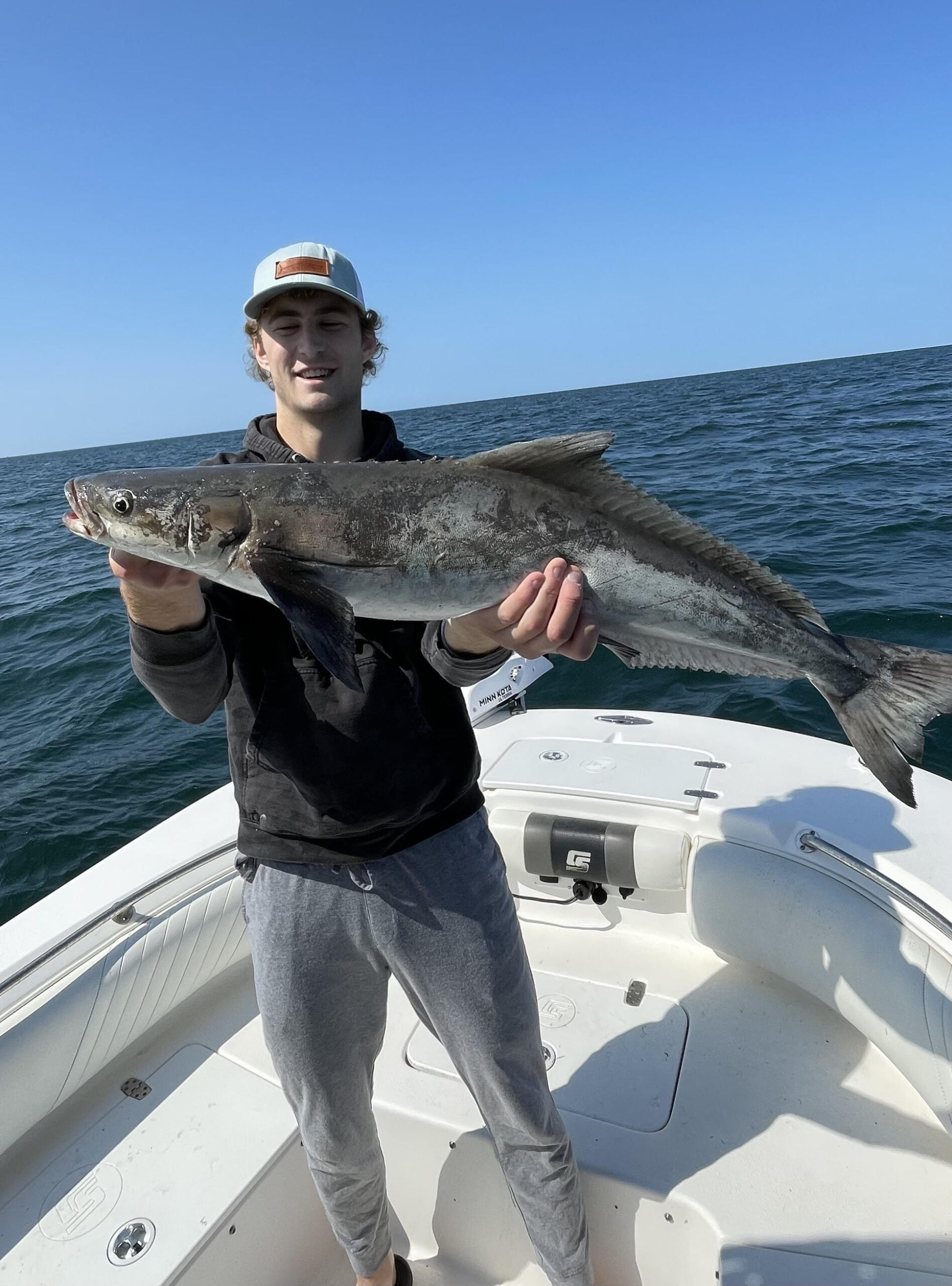
I’ve actually been able to go to New Jersey a few times in my life to visit family up there, but unfortunately, I’ve never really had the opportunity to fish there — let alone for largemouth bass. Prior to reading this article, a largemouth bass in New Jersey would’ve been the last thing I’d have thought of when it came to the state’s fishery. However, after reading this article, I have a newfound respect for the bass fishery there and hope to be able to fish it someday.
The article starts with a brief overview of the largemouth and smallmouth fishery in the state as well as some typical size ranges to expect compared to other places with these same species. It then continues and dives straight into locations, where a few of them stood out to me.
The first thing that stood out to me in this article was the fact that smallmouth bass were residing in around 60 feet of water in Greenwood Lake. Never in my life would I have thought to target smallmouth bass in this depth of water. That was super interesting to hear and something I would definitely be interested in trying at some point in the future.
Another spot that sounded super cool was the Manasquan Reservoir. I haven’t had the opportunity to fish at too many reservoirs in my day, so the thought of being able to fish one for largemouth and smallmouth bass was enticing. Additionally, the lake sees no motorboat traffic, which is great because it probably means the fish are less pressured than in other places where motorboats are actually allowed.
The final spot that really stuck out to me was Union Lake. I’m a big fan of fishing where bass actually like to live — specifically heavy cover. Based on the description that the author provided, Union Lake is apparently filled with all sorts of underwater aquatic vegetation that bass and other fish love to dwell in. This being said, I’d love to go up there and throw some sort of topwater or weedless worm setup and see what I can find. Additionally, the lake actually has some artificial reefs placed in it that I’m sure hold tons of fish. All this prime bass fishing habitat is really making me want to head up to New Jersey.
The last thing I would say before closing is to remember that the locals are always going to know more than you are. If you are new to fishing, or even from outside the state of New Jersey or visiting, it’s never a bad idea to consult a local tackle shop for some advice on what to do and where to go. Oftentimes, they will be more than happy to help you out.
I hope you guys enjoyed reading this article and these comments, and as always, good luck and tight lines!