

White Sturgeon
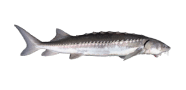
The white sturgeon, Acipenser transmontanus, is the largest freshwater fish in North America, inhabiting the rivers and coastal waters along the Pacific coast. Known for its slow growth and long lifespan, this species is often found in deep, slow-moving waters. The white sturgeon is an ancient species highly valued for its meat and roe, making it a key species in commercial and recreational fisheries.
 Length~160 (max 610)
 Weight~450 (max 630)
 WaterFresh, brackish, salt
 Water Temp14-26° F
 Depth1-122 ft
- Other names-
- Length~160 (max 610)
- Weight~450 (max 630)
- WaterFresh, brackish, salt
- Water Temp14-26° F
- Depth1-122 ft
Popular lures for White Sturgeon

Regulation for White Sturgeon
- Season-
- Bag limit-
- Vessel limit-
- Trophy limits-
- Max size-
- Min size-
- Measurement-
- Prohibited methods-
Living Conditions
🐟 Habitat preferences
- Prefers deep, slow-moving waters of large rivers, estuaries, and coastal areas
- Often found near the bottom, where it feeds on fish, invertebrates, and organic matter
- This species is highly adaptable, able to tolerate both freshwater and brackish environments
- Migrates seasonally to find suitable spawning and feeding grounds
♻️ Life cycle and mating behavior
- White sturgeons have a slow and prolonged maturation process, often taking many years to reach sexual maturity
- Spawning occurs in fast-flowing river sections over gravel beds, typically in late spring to early summer
- After hatching, juveniles stay in freshwater before gradually moving towards estuarine areas
- The species exhibits long migrations for spawning and feeding, often traveling between freshwater and marine environments throughout its life cycle