

Striped Searobin
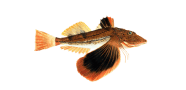
The striped searobin, Prionotus evolans, is a bottom-dwelling fish native to the western Atlantic Ocean. Known for its distinctively large pectoral fins, which resemble wings, this species is found in sandy and muddy coastal waters. It uses its "fingers," specialized rays of its pectoral fins, to probe the seabed for small invertebrates, which make up the bulk of its diet. Striped searobins are occasionally caught as bycatch but are generally not targeted by commercial fisheries.
 Length~30 (max 45)
 Weight~1 (max 2)
 WaterSalt
 Water Temp8-24° F
 Depth9-180 ft
- Other names-
- Length~30 (max 45)
- Weight~1 (max 2)
- WaterSalt
- Water Temp8-24° F
- Depth9-180 ft
Popular lures for Striped Searobin

Regulation for Striped Searobin
- Season-
- Bag limit-
- Vessel limit-
- Trophy limits-
- Max size-
- Min size-
- Measurement-
- Prohibited methods-
Living Conditions
🐟 Habitat preferences
- Prefers sandy and muddy substrates in coastal waters, often found in shallow areas near the shore
- Typically inhabits regions with soft bottoms, where it can easily hunt for food
- Feeds primarily on bottom-dwelling invertebrates like crabs, shrimp, and small mollusks
- Uses its unique pectoral fins to "walk" along the sea floor and to detect prey hidden in the substrate
♻️ Life cycle and mating behavior
- Spawning occurs in the warmer months, with eggs released into the water column
- Larvae are pelagic, meaning they drift with the currents before settling on the ocean floor as juveniles
- Juveniles tend to inhabit shallower waters before moving to deeper areas as they mature
- Little is known about the specific mating behaviors, but the species likely follows a seasonal reproductive cycle