

Steelhead
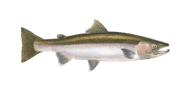
The steelhead, a migratory form of rainbow trout (Oncorhynchus mykiss), is a highly sought-after fish known for its strength and adaptability. Unlike resident rainbow trout, steelhead migrate to the ocean and return to freshwater to spawn. This species is prized in sport fishing for its powerful runs and aerial acrobatics when hooked, making it a challenging and rewarding catch for anglers.
 Length~51 (max 110)
 Weight~2 (max 25)
 WaterFresh, brackish, salt
 Water Temp14-17° F
 Depth1-11 ft
- Other namesSteelhead trout
- Length~51 (max 110)
- Weight~2 (max 25)
- WaterFresh, brackish, salt
- Water Temp14-17° F
- Depth1-11 ft
Popular lures for Steelhead

Regulation for Steelhead
- Season-
- Bag limit-
- Vessel limit-
- Trophy limits-
- Max size-
- Min size-
- Measurement-
- Prohibited methods-
Living Conditions
🐟 Habitat preferences
- Steelhead begin their life in freshwater rivers and streams, where they spend their early years before migrating to the ocean
- In the ocean, they inhabit open waters but stay relatively close to the coast, feeding on smaller fish and invertebrates
- After several years at sea, they return to their natal rivers to spawn, often traveling long distances upstream
- Anglers often find steelhead in deeper river pools and riffles during their spawning runs, especially near obstacles like fallen trees or large rocks
♻️ Life cycle and mating behavior
- Steelhead spawn in late winter to early spring, with females laying eggs in gravel nests, known as redds, in fast-flowing sections of rivers and streams
- Unlike many salmon species, some steelhead can survive spawning and return to the ocean, making them iteroparous, capable of spawning multiple times
- Juveniles, known as "smolts," stay in freshwater for a year or two before migrating to the ocean, where they grow rapidly
- During the spawning migration, steelhead exhibit aggressive behavior and are more likely to strike at lures, providing prime fishing opportunities for anglers