

Starry Flounder
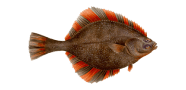
The starry flounder, Platichthys stellatus, is a flatfish recognized for its unique star-shaped scales and the distinct color difference between its upper and lower sides. Found along the coasts of the North Pacific, this species is well adapted to both saltwater and brackish environments. Its unusual appearance and the challenge it presents when hooked make it a favored catch among anglers.
 Length~45 (max 91)
 Weight~5 (max 9)
 WaterSalt
 Water Temp13-20° F
- Other namesGrindstone, Emery wheel , Long-nosed flounder
- Length~45 (max 91)
- Weight~5 (max 9)
- WaterSalt
- Water Temp13-20° F
Popular lures for Starry Flounder

Regulation for Starry Flounder
- Season-
- Bag limit-
- Vessel limit-
- Trophy limits-
- Max size-
- Min size-
- Measurement-
- Prohibited methods-
Living Conditions
🐟 Habitat preferences
- Starry flounders are typically found in shallow coastal waters, including estuaries, bays, and the mouths of rivers, where the bottom is sandy or muddy
- They are benthic feeders, meaning they stay close to the seabed, camouflaging themselves while waiting to ambush prey
- Their diet mainly includes small crustaceans, worms, and other invertebrates found on or near the bottom
- Anglers often target them in areas with soft substrates where these fish are likely to be hiding and feeding
♻️ Life cycle and mating behavior
- Starry flounders spawn in the late winter to early spring, with females releasing their eggs in deeper offshore waters
- The eggs are buoyant, drifting with the currents until they hatch, after which the larvae develop into juvenile flounders near the coast
- Juveniles typically settle in shallow, protected waters where they grow until reaching maturity, gradually moving to deeper areas as they age
- During the spawning season, these fish are more dispersed, making them more challenging to catch, but they are often more concentrated in coastal areas outside the breeding season