

Redclaw Crayfish
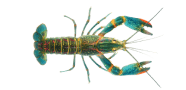
The redclaw crayfish, Cherax quadricarinatus, is a freshwater crustacean native to northern Australia and Papua New Guinea. Recognized for its bluish-green body and distinct red markings on the claws, it is a popular species in aquaculture and a favorite among anglers for its size and taste. Redclaw crayfish are hardy, adaptable, and can thrive in various freshwater habitats, making them a valuable species for both commercial and recreational fishing.
 Length~10 (max 25)
 Weight~0.1 (max 0.6)
 WaterFresh
 Water Temp9-23° F
 Depth2 ft
- Other namesAustralian red claw crayfish, Queensland red claw, Redclaw, Tropical blue crayfish, Freshwater blueclaw crayfish
- Length~10 (max 25)
- Weight~0.1 (max 0.6)
- WaterFresh
- Water Temp9-23° F
- Depth2 ft
Popular lures for Redclaw Crayfish

Regulation for Redclaw Crayfish
- Season-
- Bag limit-
- Vessel limit-
- Trophy limits-
- Max size-
- Min size-
- Measurement-
- Prohibited methods-
Living Conditions
🐟 Habitat preferences
- Redclaw crayfish prefer slow-moving or still waters, such as rivers, lakes, and ponds with abundant vegetation and shelter
- They are often found in areas with muddy or sandy bottoms, where they can burrow and create shelters
- Their diet is omnivorous, consisting of aquatic plants, algae, small invertebrates, and organic debris, making them efficient foragers
- These crayfish are highly adaptable to different water conditions, including varying levels of pH and temperature, contributing to their widespread success in diverse environments
♻️ Life cycle and mating behavior
- Redclaw crayfish typically breed during the warmer months when water temperatures rise, with females carrying eggs under their tails until they hatch
- After hatching, the young crayfish remain attached to the female for a short period before becoming independent
- Juveniles grow rapidly, especially in warmer waters, and can reach maturity within their first year
- Redclaw crayfish are nocturnal, with most of their feeding and reproductive activities occurring at night, which can influence angling strategies