

Red Drum
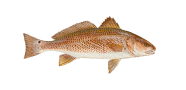
The red drum, also known as redfish, is a popular saltwater species recognized for its reddish hue and a distinctive black spot near its tail. Found primarily in coastal waters, estuaries, and bays, it is a favorite among anglers for its strong fight and tasty flesh. Red drum can adapt to various salinities, making them versatile targets in both inshore and nearshore environments. Their aggressive feeding habits make them an exciting catch.
 Length~71 (max 149)
 Weight~3 (max 44)
 WaterSalt, brackish
 Water Temp4-34° F
 Depth40 ft
- Other namesRedfish, Channel bass, Puppy drum, Spottail bass, Red
- Length~71 (max 149)
- Weight~3 (max 44)
- WaterSalt, brackish
- Water Temp4-34° F
- Depth40 ft
Popular lures for Red Drum

Regulation for Red Drum
- SeasonAlways open
- Bag limit3
- Vessel limit-
- Trophy limits>26" (1 fish)
- Max size26"
- Min size16"
- MeasurementTotal length
- Prohibited methods-
Living Conditions
🐟 Habitat preferences
- Red drum prefer shallow, warm waters and are commonly found in estuaries, bays, and coastal lagoons
- They often congregate around structures like oyster reefs, grass beds, and sandbars, where they search for food
- These fish primarily feed on small fish, shrimp, crabs, and other crustaceans, using their keen sense of smell to locate prey
- Red drum are frequently found in waters with muddy or sandy bottoms, especially where tidal currents bring in a steady supply of food
♻️ Life cycle and mating behavior
- Red drum spawn during the late summer and fall, usually in deeper waters near the mouths of bays or inlets
- Males produce a distinctive drumming sound to attract females during the spawning process
- After spawning, eggs hatch quickly, and the larvae move into shallow estuarine areas where they find abundant food and shelter
- As they grow, juvenile red drum gradually move to deeper waters, eventually joining adult populations in more open areas