

Peacock Hind
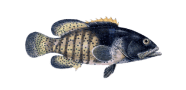
The Peacock Grouper (Cephalopholis argus), also known as the Blue-Spotted Grouper, is a reef-dwelling species native to the Indo-Pacific region. It is easily identified by its dark brown body covered with vibrant blue spots. This species is a voracious predator, feeding on small fish and crustaceans. Peacock Groupers are popular in the aquarium trade but are considered invasive in some areas due to their aggressive nature and impact on local ecosystems.
 Length~20 (max 60)
 Weight~1 (max 3)
 WaterSalt
 Water Temp22-28° F
 Depth1-40 ft
- Other namesRoi, Bluespotted grouper, Celestial grouper
- Length~20 (max 60)
- Weight~1 (max 3)
- WaterSalt
- Water Temp22-28° F
- Depth1-40 ft
Popular lures for Peacock Hind

Regulation for Peacock Hind
- Season-
- Bag limit-
- Vessel limit-
- Trophy limits-
- Max size-
- Min size-
- Measurement-
- Prohibited methods-
Living Conditions
🐟 Habitat preferences
- Peacock Groupers prefer coral reefs, particularly areas with plenty of hiding spots in crevices and caves
- They are often found in shallow to moderately deep waters, typically near the reef’s edge
- Their diet mainly consists of small fish and invertebrates, which they ambush from their hiding spots
- These groupers are solitary and territorial, defending their chosen area aggressively
♻️ Life cycle and mating behavior
- Peacock Groupers are protogynous hermaphrodites, meaning they begin life as females and can later change to males
- Spawning occurs during specific seasons, often correlated with lunar cycles, when they release eggs into the water column
- Juveniles settle on coral reefs after hatching, finding shelter in small crevices until they grow larger
- As they mature, individuals become more territorial, with males establishing dominance over a specific area or group of females