

Nile Tilapia
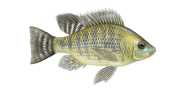
The Nile tilapia is a freshwater fish known for its adaptability and importance in aquaculture. It thrives in various habitats, including rivers and lakes, and has become a significant species for fisheries. Nile tilapia are characterized by their deep bodies, small heads, and distinct vertical stripes on the caudal fin. They are generally omnivorous, feeding on phytoplankton and algae. This species is widely farmed and has been introduced to many regions, sometimes causing ecological impacts.
 Length~28 (max 60)
 Weight~2 (max 5)
 WaterFresh
 Water Temp8-42° F
 Depth20 ft
- Other namesMango fish, Nilotica, Boulti
- Length~28 (max 60)
- Weight~2 (max 5)
- WaterFresh
- Water Temp8-42° F
- Depth20 ft
Popular lures for Nile Tilapia

Regulation for Nile Tilapia
- SeasonAlways open
- Bag limitNo
- Vessel limit-
- Trophy limits-
- Max size-
- Min sizeNo
- Measurement-
- Prohibited methods-
Living Conditions
🐟 Habitat preferences
- Nile tilapia prefer warm freshwater environments such as rivers, lakes, and even man-made canals
- They are capable of living in brackish waters, although they do not thrive in pure saltwater
- These fish are primarily diurnal, actively feeding during the day on phytoplankton, algae, and sometimes insect larvae
- Juvenile Nile tilapia are more omnivorous, consuming a variety of plant and animal matter
♻️ Life cycle and mating behavior
- Nile tilapia reach sexual maturity within a few months, depending on water temperature, and reproduce when the temperature is favorable
- Spawning occurs multiple times a year, with females incubating eggs in their mouths until they hatch
- Males establish territories in shallow waters, where they dig simple nests to attract females for breeding
- The species is known for its extended parental care, with females guarding the larvae in their mouths until they are ready to be independent