

Mozambique Tilapia
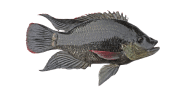
The Mozambique tilapia (Oreochromis mossambicus) is a hardy freshwater fish native to Southern Africa. This species has been widely introduced globally, primarily for aquaculture and fisheries. Known for its adaptability, the Mozambique tilapia can thrive in various environments, from rivers and lakes to brackish water. It feeds on a wide range of food, including algae and small invertebrates, making it an omnivorous species. It is also known for its role as a maternal mouthbrooder, where females protect their young by keeping them in their mouths.
 Length~20 (max 39)
 Weight~0.5 (max 1)
 WaterFresh
 Water Temp17-35° F
 Depth1-12 ft
- Other namesBlack tilapia, Blue kurper
- Length~20 (max 39)
- Weight~0.5 (max 1)
- WaterFresh
- Water Temp17-35° F
- Depth1-12 ft
Popular lures for Mozambique Tilapia

Regulation for Mozambique Tilapia
- Season-
- Bag limit-
- Vessel limit-
- Trophy limits-
- Max size-
- Min size-
- Measurement-
- Prohibited methods-
Living Conditions
🐟 Habitat preferences
- Mozambique tilapia inhabit diverse environments, including rivers, lakes, and estuaries, preferring warm, vegetated waters.
- They are often found in shallow, slow-moving waters with muddy or sandy bottoms, avoiding fast-flowing streams
- Their diet is varied, consisting mainly of algae, aquatic plants, small invertebrates, and detritus
- They are highly tolerant of different salinities, thriving in both fresh and brackish water, and even surviving in highly saline conditions
♻️ Life cycle and mating behavior
- Spawning occurs in shallow waters, where males dig nests and establish territories
- Males display vibrant colors during courtship and defend their nests aggressively against intruders
- Females incubate fertilized eggs in their mouths, protecting the young until they are ready to swim freely
- After releasing the fry, females may breed again within the same season, producing multiple broods annually