

Longtail Tuna
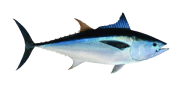
The Longtail Tuna, known for its streamlined body and distinctive fin shape, is a prized catch among anglers. This species inhabits warm tropical and subtropical waters across the Indo-West Pacific. Renowned for its speed and strength, the Longtail Tuna is a popular target for sport fishing. It typically forms schools and feeds on a variety of small fish and invertebrates. While highly valued in commercial fisheries, it is also sought after for fresh, dried, or canned consumption.
 Length~70 (max 145)
 Weight~15 (max 35)
 WaterSalt
 Water Temp24-28° F
 Depth10-80 ft
- Other namesNorthern bluefin tuna
- Length~70 (max 145)
- Weight~15 (max 35)
- WaterSalt
- Water Temp24-28° F
- Depth10-80 ft
Popular lures for Longtail Tuna

Regulation for Longtail Tuna
- Season-
- Bag limit-
- Vessel limit-
- Trophy limits-
- Max size-
- Min size-
- Measurement-
- Prohibited methods-
Living Conditions
🐟 Habitat preferences
- Longtail Tuna prefers warm coastal waters and is often found in the upper layers of the ocean
- It avoids areas with low salinity, such as estuaries, favoring clear, deeper waters where visibility is high
- This species frequently forms schools, which can vary in size depending on the availability of prey
- Its diet includes small fish, cephalopods, and crustaceans, making it an active predator in its habitat
♻️ Life cycle and mating behavior
- The Longtail Tuna typically reaches sexual maturity at a moderate size, with spawning occurring in warmer seasons
- During the spawning season, these fish migrate to specific areas where conditions are favorable for laying eggs
- After spawning, juveniles grow rapidly, with their feeding patterns gradually expanding as they mature
- Adult Longtail Tuna continue to migrate in search of food, following the movement of schools of baitfish