

Longnose Sucker
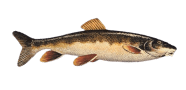
The Longnose Sucker, Catostomus catostomus, is a freshwater fish widely distributed across North America, especially in Canada and Alaska. This species thrives in cold, clear waters of lakes and rivers. Recognized by its elongated snout and sucker mouth, it feeds mainly on benthic invertebrates. The Longnose Sucker is important for both local fisheries and as prey for larger fish and birds.
 Length~22 (max 64)
 Weight~2 (max 3)
 WaterFresh, brackish
 Water Temp15° F
 Depth7-180 ft
- Other names-
- Length~22 (max 64)
- Weight~2 (max 3)
- WaterFresh, brackish
- Water Temp15° F
- Depth7-180 ft
Popular lures for Longnose Sucker

Regulation for Longnose Sucker
- Season-
- Bag limit-
- Vessel limit-
- Trophy limits-
- Max size-
- Min size-
- Measurement-
- Prohibited methods-
Living Conditions
🐟 Habitat preferences
- Longnose Suckers are typically found in cold, clear lakes and streams with gravel or rocky bottoms
- They prefer deeper waters but move to shallower areas, especially during spawning
- Their diet primarily consists of benthic invertebrates, such as insect larvae and small crustaceans
- Juveniles are often found in slower-moving water, where they are less vulnerable to predators
♻️ Life cycle and mating behavior
- Spawning occurs in spring when adults migrate to shallow, gravel-bottomed streams
- Males establish territories in fast-flowing areas, where females lay eggs after a brief courtship
- The eggs adhere to gravel and hatch into larvae, which remain in the stream for some time before migrating to deeper water
- Post-spawning, adults often return to deeper lake environments, while some river-resident fish may stay near spawning areas throughout the summer