

Largemouth Bass
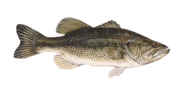
The largemouth bass is a highly sought-after freshwater game fish native to North America, known for its aggressive behavior and large mouth extending past its eyes. This species is popular among anglers due to its thrilling fight when hooked. Largemouth bass prefer warm, vegetated waters, thriving in lakes, rivers, and ponds. They are adaptable predators, feeding on a variety of prey including fish, amphibians, and insects, making them both challenging and rewarding to catch.
 Length~38 (max 75)
 Weight~5 (max 11)
 WaterFresh
 Water Temp18-26° F
 Depth5-15 ft
- Other namesWidemouth bass, Bigmouth bass, Black bass, Bucketmouth, Largie
- Length~38 (max 75)
- Weight~5 (max 11)
- WaterFresh
- Water Temp18-26° F
- Depth5-15 ft
Popular lures for Largemouth Bass

Regulation for Largemouth Bass
- Season-
- Bag limit-
- Vessel limit-
- Trophy limits-
- Max size-
- Min size-
- Measurement-
- Prohibited methods-
Living Conditions
🐟 Habitat preferences
- Largemouth bass favor warm, calm waters, often found in lakes, ponds, and slow-moving rivers with abundant aquatic vegetation
- They typically inhabit areas near structures such as submerged logs, weed beds, and docks, where they can ambush prey
- Their diet includes smaller fish, crayfish, frogs, and insects, with a preference for live, moving prey
- These fish are known to be territorial and will establish a home range, staying in a familiar area unless disturbed or in search of food
♻️ Life cycle and mating behavior
- Largemouth bass spawn in the spring when water temperatures rise, with males creating and guarding nests in shallow areas
- After the female lays eggs, the male aggressively protects the nest from predators until the fry hatch and can swim away
- Juveniles often stay near vegetation for protection, gradually moving to deeper waters as they grow
- Largemouth bass are most active during dawn and dusk, which are prime times for fishing, particularly during their feeding periods