

Lake Trout
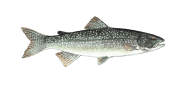
The lake trout, Salvelinus namaycush, is a cold-water fish native to North America's deep lakes. Known for its large size and longevity, this species is highly valued by anglers. Lake trout prefer the cold, oxygen-rich waters found at great depths, making them a challenging catch. Their diet mainly consists of smaller fish, and they play a crucial role in the ecosystems of the lakes they inhabit.
 Length~75 (max 150)
 Weight~7 (max 46)
 WaterFresh
 Water Temp7-12° F
 Depth20-60 ft
- Other namesMackinaw, Namaycush, Lake char, Touladi, Grey trout
- Length~75 (max 150)
- Weight~7 (max 46)
- WaterFresh
- Water Temp7-12° F
- Depth20-60 ft
Popular lures for Lake Trout

Regulation for Lake Trout
- Season-
- Bag limit-
- Vessel limit-
- Trophy limits-
- Max size-
- Min size-
- Measurement-
- Prohibited methods-
Living Conditions
🐟 Habitat preferences
- Lake trout thrive in deep, cold lakes with high oxygen levels, often found near the bottom
- They prefer rocky or sandy substrates where they can hunt smaller fish and other aquatic organisms
- These fish are most active in cooler waters and tend to stay in deeper areas during warmer months
- Their diet is diverse, including fish, crustaceans, and insects, which makes them adaptable predators
♻️ Life cycle and mating behavior
- Spawning occurs in the fall when lake trout move to shallow, rocky areas
- Males and females release eggs and sperm over the rocks, where fertilization occurs externally
- After spawning, adults return to deeper waters, leaving the eggs to develop on their own
- Lake trout have a slow growth rate, and juveniles remain in shallow, protected areas until they mature