

Lake Sturgeon
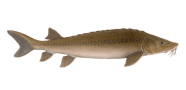
The lake sturgeon, Acipenser fulvescens, is a large freshwater fish native to North America, primarily found in the St. Lawrence-Great Lakes, Hudson Bay, and Mississippi River basins. This ancient species is notable for its long lifespan and slow growth, making it vulnerable to overfishing. Lake sturgeons inhabit deep river and lake bottoms, feeding on a variety of small organisms. They are considered a valuable species for both commercial and recreational fishing, though conservation efforts are essential due to declining populations.
 Length~100 (max 220)
 Weight~30 (max 108)
 WaterFresh
 Water Temp10-18° F
 Depth5-10 ft
- Other namesRock sturgeon
- Length~100 (max 220)
- Weight~30 (max 108)
- WaterFresh
- Water Temp10-18° F
- Depth5-10 ft
Popular lures for Lake Sturgeon

Regulation for Lake Sturgeon
- Season-
- Bag limit-
- Vessel limit-
- Trophy limits-
- Max size-
- Min size-
- Measurement-
- Prohibited methods-
Living Conditions
🐟 Habitat preferences
- Lake sturgeons prefer the deep, slow-moving waters of large lakes and rivers, often residing near sandy or muddy bottoms
- They are bottom-dwellers, using their barbels to locate food, which includes insects, small fish, and crustaceans
- This species can also tolerate brackish water, occasionally moving between freshwater and slightly salty environments
- Due to their sensitivity to water quality, sturgeons are found in areas with high oxygen levels and minimal pollution
♻️ Life cycle and mating behavior
- Spawning occurs in spring when adults migrate to shallow, rocky river areas with strong currents
- Females lay eggs on rocks or gravel, where males fertilize them externally
- After spawning, adults return to deeper waters, while the eggs hatch into larvae that drift downstream to safer habitats
- Lake sturgeons have a slow maturation process, taking many years to reach reproductive age, which contributes to their vulnerability