

Cutthroat Trout
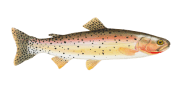
The cutthroat trout, Oncorhynchus clarkii, is a freshwater fish native to western North America. Recognized for its distinctive red or orange slash marks under the jaw, it inhabits a range of water bodies from small streams to large lakes. Known for its diverse subspecies, this trout is a prized game fish due to its aggressive nature and adaptability.
 Length~40 (max 102)
 Weight~2 (max 19)
 WaterFresh, brackish, salt
 Water Temp3-15° F
 Depth200 ft
- Other names-
- Length~40 (max 102)
- Weight~2 (max 19)
- WaterFresh, brackish, salt
- Water Temp3-15° F
- Depth200 ft
Popular lures for Cutthroat Trout

Regulation for Cutthroat Trout
- Season-
- Bag limit-
- Vessel limit-
- Trophy limits-
- Max size-
- Min size-
- Measurement-
- Prohibited methods-
Living Conditions
🐟 Habitat preferences
- Cutthroat trout prefer clear, cold, well-oxygenated waters in streams, rivers, and lakes
- They thrive in habitats with gravel bottoms and abundant cover like rocks and vegetation
- Their diet consists of aquatic insects, small fish, and crustaceans, making them opportunistic feeders
- Juveniles are often found in shallow, slower-moving waters with plenty of hiding spots
♻️ Life cycle and mating behavior
- Spawning occurs in spring, usually in gravel-bottomed streams with clean, cold water
- Females dig nests (redds) in the stream bed to lay eggs, which are then fertilized by males
- After hatching, fry remain in the stream for a year or two before migrating to larger bodies of water
- Some populations are anadromous, meaning they migrate from the ocean to freshwater to spawn