

Common Bluestripe Snapper
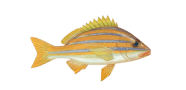
The common bluestripe snapper, Lutjanus kasmira, is a tropical marine fish found in the Indo-Pacific region. Easily recognized by its vibrant yellow body with blue horizontal stripes, it inhabits coral reefs and is often seen in large schools. This species is popular in both commercial fisheries and recreational angling due to its abundance and striking appearance.
 Length~25 (max 40)
 Weight~1 (max 2)
 WaterSalt
 Water Temp20-28° F
 Depth60-265 ft
- Other namesBluestripe snapper, Bluebanded snapper, Bluestripe sea perch, Fourline snapper, Blue-line snapper
- Length~25 (max 40)
- Weight~1 (max 2)
- WaterSalt
- Water Temp20-28° F
- Depth60-265 ft
Popular lures for Common Bluestripe Snapper

Regulation for Common Bluestripe Snapper
- Season-
- Bag limit-
- Vessel limit-
- Trophy limits-
- Max size-
- Min size-
- Measurement-
- Prohibited methods-
Living Conditions
🐟 Habitat preferences
- Bluestripe snappers are commonly found in coral reefs, frequenting shallow lagoons and outer reef slopes
- They tend to form large aggregations around coral structures, caves, and shipwrecks during daylight hours
- Juveniles prefer seagrass beds near patch reefs, providing them with ample cover and food
- Their diet includes fish, shrimp, crabs, cephalopods, and planktonic crustaceans, making them opportunistic feeders
♻️ Life cycle and mating behavior
- Bluestripe snappers spawn in aggregations, typically near coral reefs where currents aid in dispersing eggs
- Larvae are planktonic and settle in suitable habitats as juveniles, gradually moving to adult habitats
- These fish show high site fidelity, often returning to the same spawning and feeding grounds
- They exhibit schooling behavior, which provides protection from predators and increases foraging efficiency