

Black Bass
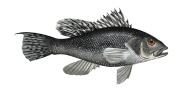
The genus Micropterus, commonly known as black bass, includes popular freshwater sport fish such as largemouth and smallmouth bass. Native to North America, these species thrive in lakes, rivers, and reservoirs, making them a prime target for recreational fishing. Black bass are known for their aggressive nature and strong fight when hooked, characteristics that make them highly valued by anglers. They have been widely introduced beyond their native range for sport fishing.
 Length~30 (max 100)
 Weight~3 (max 11)
 WaterFresh
 Water Temp12-21° F
 Depth7 ft
- Other names-
- Length~30 (max 100)
- Weight~3 (max 11)
- WaterFresh
- Water Temp12-21° F
- Depth7 ft
Popular lures for Black Bass

Regulation for Black Bass
- Season-
- Bag limit-
- Vessel limit-
- Trophy limits-
- Max size-
- Min size-
- Measurement-
- Prohibited methods-
Living Conditions
🐟 Habitat preferences
- Black bass prefer warm, slow-moving waters with abundant cover such as submerged logs, vegetation, or rock structures
- They are often found near the shorelines of lakes and rivers, where they can ambush prey
- These fish are opportunistic feeders, consuming a wide range of prey including fish, crayfish, and insects
- In clearer waters, black bass may be found at greater depths, while in turbid conditions, they tend to stay closer to the surface
♻️ Life cycle and mating behavior
- Black bass typically spawn in the spring when water temperatures rise, preferring shallow areas with a sandy or gravelly bottom
- Males create and guard nests, where females lay their eggs before departing
- After the eggs hatch, males continue to protect the fry until they can fend for themselves
- As the fry grow, they gradually move to deeper waters, with their diet and behavior evolving as they mature