

Atlantic Sturgeon
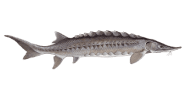
The Atlantic sturgeon, Acipenser oxyrinchus, is a large, anadromous fish native to the eastern coast of North America. It is known for its bony plates and elongated body. This species migrates between freshwater and marine environments, and it is highly valued for its roe, which is processed into caviar.
 Length~200 (max 500)
 Weight~150 (max 360)
 WaterFresh, salt, brackish
 Water Temp13-26° F
 Depth1-46 ft
- Other names-
- Length~200 (max 500)
- Weight~150 (max 360)
- WaterFresh, salt, brackish
- Water Temp13-26° F
- Depth1-46 ft
Popular lures for Atlantic Sturgeon

Regulation for Atlantic Sturgeon
- SeasonProtecting
- Bag limit-
- Vessel limit-
- Trophy limits-
- Max size-
- Min size-
- Measurement-
- Prohibited methods-
Living Conditions
🐟 Habitat preferences
- Atlantic sturgeons inhabit estuaries, rivers, and coastal waters.
- They prefer sandy or muddy bottoms where they forage for benthic invertebrates.
- Juveniles reside in brackish waters, migrating to the ocean as they mature.
- Adults are highly migratory, often traveling long distances along the coast.
♻️ Life cycle and mating behavior
- Spawning occurs in freshwater rivers during the spring and early summer.
- Females lay eggs on gravel or rocky substrates in fast-flowing waters.
- Larvae drift downstream to estuarine nurseries, where they grow before migrating to the ocean.
- Sturgeons exhibit site fidelity, returning to their natal rivers to spawn after reaching maturity.