

Alewife
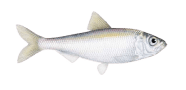
The Alewife, Alosa pseudoharengus, is a small, schooling fish found in coastal waters and freshwater systems in North America. Recognizable by its silver body and dark spot near the gills, it plays a crucial role in the food web, serving as prey for larger fish. Alewives are known for their migratory behavior, moving from the sea to freshwater to spawn.
 Length~30 (max 40)
 Weight~1 (max 2)
 WaterFresh
 Water Temp8-12° F
- Other names-
- Length~30 (max 40)
- Weight~1 (max 2)
- WaterFresh
- Water Temp8-12° F
Popular lures for Alewife

Regulation for Alewife
- SeasonAlways open (Tidal Waters); The open season coincides with an open season for a sportfish: salmon, trout, or smallmouth bass (Inland Waters)
- Bag limit20
- Vessel limit-
- Trophy limits-
- Max size-
- Min sizeNo
- Measurement-
- Prohibited methods-
Living Conditions
🐟 Habitat preferences
- Alewives are typically found in marine, freshwater, and brackish environments, often inhabiting coastal areas and estuaries
- They prefer temperate waters and are frequently seen in large schools near the surface
- Alewives feed on zooplankton, small fish, and crustaceans, making them a key part of the aquatic food chain
- They are commonly found in environments with varying bottom types, including sandy and rocky substrates
♻️ Life cycle and mating behavior
- Alewives are anadromous, migrating from the ocean to freshwater rivers and lakes to spawn during spring
- Spawning occurs in shallow, quiet waters where eggs are released and fertilized externally
- After spawning, adults return to the sea, while larvae stay near spawning grounds until they grow
- Juveniles form schools and migrate downstream in late summer and autumn, eventually reaching the sea to continue their life cycle