
Any question about the article?
Please use your work e-mail, so we can connect with you
Here’s the good news about crappie fishing: They’re available all over the U.S, creel limits are liberal, and they are often the star of everyone’s fish fry.
Moreover, since the fish are often described as “wet paper bags” given the species’ reluctance to fight after being hooked, they are an excellent fish to target for first-time anglers or those re-discovering freshwater fishing. Simply stated, never confuse crappie with largemouth or smallmouth bass.
Whether you’re Down South, Out West, or in between, chances are crappie are available in a nearby reservoir or lake. They are also found in rivers and creeks, but fishing for them in the current is often frustrating. Crappies are typically easy to locate; look for them around structures, such as boat docks, piers, fallen trees and stumps and rockpiles. And since they congregate in schools, you’re likely to find more once you find one.
In terms of equipment, fishing for crappie harkens back to simpler times. While there are several options, the basic equipment for crappie fishing is a lightweight rod, a spinning reel with a 4-pound test line, and live bait at the end of a small hook or a crappie jig or two.
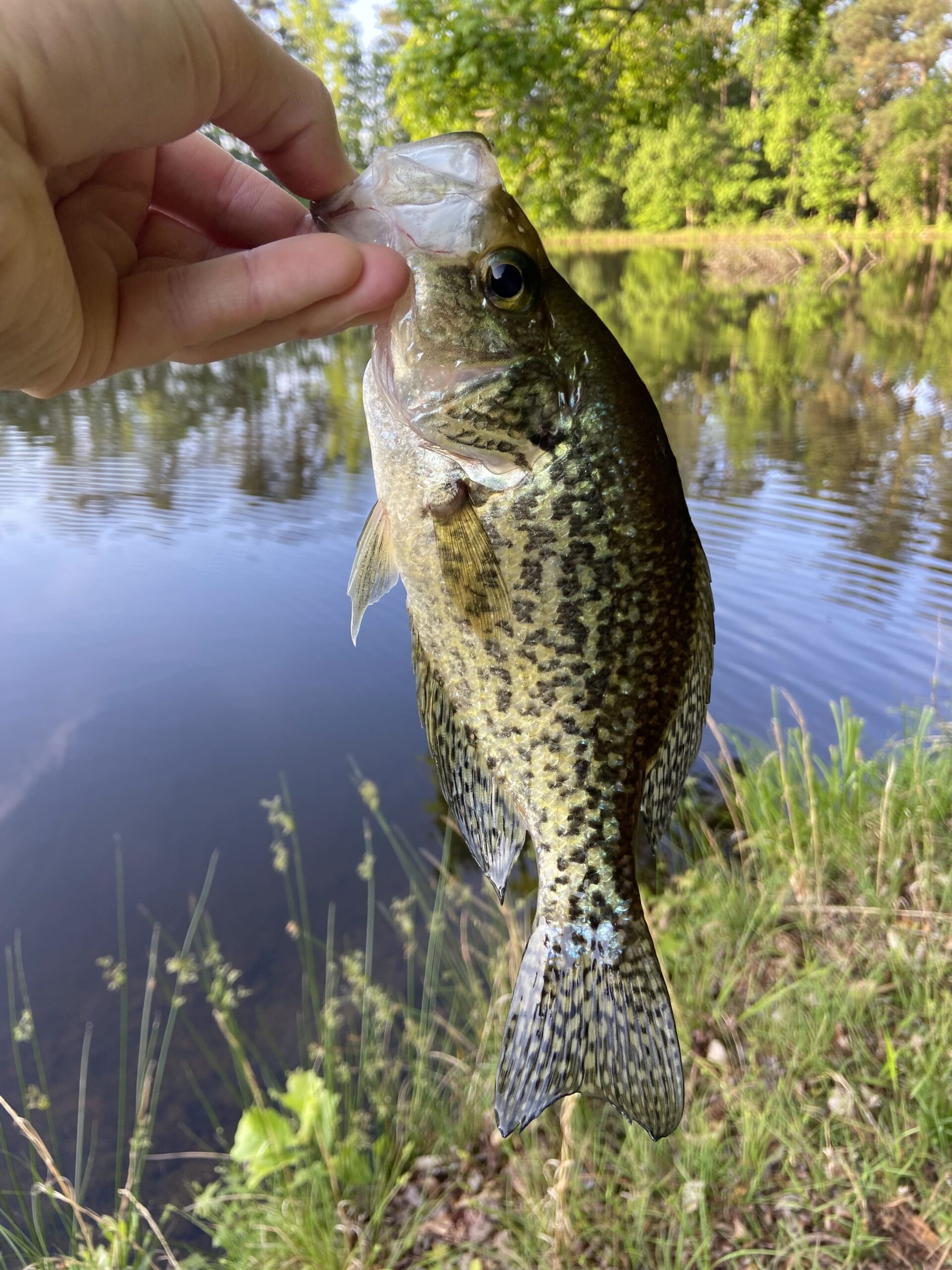
The two species of fish found in the U.S. are black and white crappie. While there are subtle differences in appearance (black crappie are darker in color and tend to be smaller than white crappie), both types typically measure between 5-20 inches (the average is 10 inches) and seldom weigh more than 1.5 pounds.
Crappies are frequently targeted during their spring spawning season (dawn and late nights are the best times) they can be fished all year, even on the coldest winter days.
It shouldn’t be difficult if you’re looking for locations to find crappie. The most popular locations are the Southern and Midwestern regions and the West. The best spots, however, can be found in Mississippi and Alabama, including Grenada Lake and Sardis Lake in Mississippi, Weiss Lake in northern Alabama (“The Crappie Capital of the World”), and Pickwick Lake, which borders Mississippi, Alabama, and Tennessee.
Fishbox can help you find the best locations in your area.
Let’s look into all the aspects that go into making a crappie fishing excursion successful:
Fishing for crappie differs from most freshwater fishing because it doesn’t require brute force, endurance, or stamina. This is one of the reasons that it’s a good activity for those new to fishing or those who haven’t fished in several years.
Crappie fishing requires a light touch and finesse. These fish are not voracious fighters and don’t go after huge hunks of cut bait or large lures. Even the largest crappie isn’t likely to hit on bait more than 2 or 3 inches long, smaller live minnows (which create their movement), and rigs weighing only 1/16-ozs. should do the trick.
Additionally, most spinner starter combos available at retailers are a viable way to start fishing for crappie. Of course, anglers have no shortage of options if they want to step up from there. Also, keep in mind that casting accuracy isn’t too critical. Crappie—unlike largemouth and smallmouth bass- won’t “ambush” or chase bait; rather, they like it to be presented near their schooling.
Most of the mistakes beginners make when fishing for crappie result from being over-aggressive. Crappies are subtle when they hit; some call it a “tap” and others refer to them grabbing bait as a “thump.” Sometimes, you may not realize you have a crappie hooked, so you must pay attention to your line and recognize the difference between a line pooling on the surface when it reaches the bottom and one with a crappie at the end.
Setting the hook too hard or too quickly is a recipe for disaster and is best avoided if you don’t want to injure the fish. When setting a hook with a crappie on the line, just a firm jerk of the line will work.
Retrieval should always be at a slow, steady pace.
Different seasons bring different opportunities when it comes to crappie fishing.
While it’s generally understood that the pre-spawn/spawn spring and post-spawn fall present anglers with the most opportunities, early morning and late evening are the best times to target crappie. The low-light conditions at both times make the crappie a little less wary and more willing to hit at live bait or jigs.
Here’s a brief rundown of what each season presents:
Read also: Ice Fishing Basics
Besides simply using a bobber and a hook with live bait or a lure, two of the most popular and effective techniques to catch crappie are vertical jigging and spider rigging.
Since crappie like to reside around brushy areas and submerged structures, vertical jigging may be the safest choice, given that bait or lure doesn’t have a chance to get snagged thanks to the constant movement. The technique simply involves dropping a jig to the depth where you believe the crappie school will be and raising and lowering the rod to entice the crappie to bite.
It’s a sound technique to use around shorelines, as well as deeper water (20-30 feet) where crappies sometimes head in the heat of summer. The key to this technique is slow and steady movement and avoiding side-to-side movement. If crappie aren’t hitting your jig, vary your speed and pauses between raising and lowering your rod to see what catches the most fish.
Varying in the depth you’re fishing is another sound strategy.
Spider rigging is another alternative. Best employed for pre-spawn (Spring) and post-spawn fishing, spider jigging is done by trolling at slow speeds (under 0.5 miles an hour) with double minnow rigs on two or more poles. Think of spider trolling as casting a broad web for crappies, typically over brush piles, submerged trees or stumps and creek channels.
Regarding finding crappie, they often congregate in areas like basins, near standing weeds and brush piles, or along abrupt depth changes. While fishing for crappie can easily be done from a shoreline in shallower areas, there’s also the option of fishing from a boat or kayak in depths from 25-45 feet of water.
Since the fish are generally smaller in size/weight and are not hard-hitters after taking the bait, most anglers opt for lighter, more responsive gear and smaller tackle. The idea is to feel the fish when they hit, as they are often very subtle in their attack.
The most popular gear includes light or ultra-light rods measuring anywhere from 6-7.5 feet in length, like a Shakespeare 7.5-foot ultra-light graphite rod. But remember that the rod you select typically won’t be used for only crappie fishing, so find one that can also handle bass and other freshwater denizens.
Additionally, shorter rods are often preferred when trolling for crappie and other freshwater species from a boat.
Some anglers vary the size of their rods based on their fishing environments. For example, if you’re simply casting them in a lake or a pond, a six or 7-foot rod should do the trick. When the scenario switches to brush piles or near bridge pilings from a boat, longer rods (8- 10 feet) could be worth investigating so the fish don’t get spooked.
1500—2000 size spinning reels with smooth and responsive drag systems are a good starting point for reels. Popular reel brand options fitting this description include Shimano, Daiwa, and Pflueger.
In terms of line, start with 4-6 lbs. test braided line with a fluorocarbon leader for invisibility and sensitivity.
While live bait is always the first consideration when fishing for crappie, especially live minnows and shiners. Keep the minnows on the small side; crappie don’t typically hit on large live bait or oversized spinners, crankbait lures, or soft plastics. They are a smaller fish that prefers the tiniest bait.
Minnows are often the first choice for novice anglers, given that they provide their movement on the hook which attracts crappies. They’re also a desirable choice in stained water when crappie have limited visibility and are relying more on their sense of smell.
Before introducing your bait, anglers in the Midwest swear by chumming the water you plan to fish with brightly colored crappie pellets around structures, such as bridge piling and brushy areas. Not only do the pellets contain nutrients for the fish, but they also act as an attractant with their scent.
Again, since you may be fishing for more than crappie or your next fishing trip, the pellets are also handy for bluegills and channel fish. Think of the pellets as an appetizer before the main bait course is served (or presented), especially when water temperatures are in the 50°F-60°F degree range.
Another option: If you can’t find crappie pellets in your area, try tuna- or any fish-flavored dry cat food.
Since fishing for crappie doesn’t have to be complicated, using live bait on a 1/0 or 2/0 size hook and a slip bobber is also an option. Slip bobbers allow anglers to control the depth at which they are fishing, which can minimize the bait being pushed or dragged by current, making it more attractive to crappie (who liked to be served their food, without chasing or hinting for it).
If crappie aren’t hitting your bait while using a slip bobber, change the bobber’s “stop” position or depth, or add some BB-size weight to the line.
Besides live bait, many anglers opt for brightly colored #10 jigs tipped with small minnows, mealworms, wax worms, or ½-inch pieces of nightcrawlers. The bright colors—such as chartreuse- are best used in muddy or stained water, while more neutral colors (greenish grays, for example) are preferred for clear water.
Jigs can be a more efficient choice for crappie fishing because you don’t have to rebate as often or worry about keeping them alive. The tradeoff is that they don’t swim; determining how much action to provide comes down to trial and error. Typically, casting a jig and letting it fall to your desired depth is all it takes; but sometimes a little twitch or bob delivers positive results.
No matter what tackle you prefer, bring extras, since crappie are known to congregate in snag-prone areas, having back-ups in your tackle box is always prudent.
Read also: The Ultimate Guide to Jig Fishing: Tips, Techniques, and Best Practices for Beginners
Whether you’re just getting involved or a seasoned angler returning to the sport, fishing for crappie is relatively easy, and with the right gear and knowledge about their typical locations, quite fulfilling.
Complex equipment isn’t mandatory, the availability of the fish is spread throughout the country—although the south is probably the best location—and they won’t put up much of a fight once hooked. There’s also the fact that crappie congregate in schools, so catching one in a location could lead to several fish being hooked throughout the day.
It all adds up to this: Crappie fishing may be one of the most enjoyable freshwater fishing activities.
Are crappie good to eat?
Yes, with their sweet, flaky meat, crappie are always a welcome addition to the dinner table and often the star attraction at a fish fry.
Where do I find crappie?
Crappie can typically be found around structures such as docks, submerged trees, and brushy areas. In the summer, they head for deeper water and school around structures as well as drop-offs and humps in lakes.
What do crappies like to eat?
While their diet changes during their lifespan, crappie prefer to eat insects, insect larvae, crustaceans, and small fish (minnows, shiners, and juvenile shad, etc).
Best setup for crappie fishing?
Most anglers opt for a 7.0 or 7.5-foot ultra-light rod with a 1500 or 2000 size reel and 4-6 lbs. test braided line. The versatility of the braided line makes it a solid choice, given that you’ll probably be catching other fish while targeting crappies.
Best time to catch crappie?
Whether you’re targeting white or black crappie, early morning and late evening are the best times to catch crappies.
Do crappie eat worms?
While they aren’t the first choice for live bait by most anglers (minnows are), mealworms, bloodworms, and nightcrawlers (cut into ½-inch pieces) can all be effective, especially combined with a jig head. For first time-anglers, simply using worms near the shoreline in the warmer months will usually attract smaller crappies.
Even in my many years of fishing experience, I’ve never really targeted crappie or had the desire to catch them that much. In fact, I don’t think I’ve ever once actually gone out fishing with the intent of catching crappie. Instead, crappie have usually been bycatch for me over the years. However, I’m extremely interested in learning how to actually target these fish, so let’s jump right into the article.
The first part of the article is just a brief overview of the species as a whole, talking about the two different kinds of crappie (black and white) as well as their general nature and where you can find them across the country. Even after reading just this first part, it seems like it’s a better idea to ask “where can’t I catch crappie” as opposed to “where can I catch crappie.”
The next section gives another overview, this time about actually fishing for crappie. One thing I learned here was just that crappie fishing is a lot about the action of your bait and finesse. There’s no brute force required, like the article also mentions.
While the article already tells us that pre- and post-spawn are the best times to catch crappie, the next section goes into more detail, breaking it down season by season. Upon reading this, it was very easy to see that spring is the best time of year to catch these fish. Summer is also good, while fall is decent. Winter is when things really slow down because of their move to deep water. This pattern is echoed by many freshwater species, so it came as no surprise to me that this was the same for crappie.
The next section gives the readers a couple different methods of targeting these crappie. The first of these — vertical jigging — I have done for many other species in many different places, but never for crappie. I honestly now want to try vertical jigging for crappie just to see how different it is. The next technique listed I had never even heard of — spider rigging. It seems to be a genius way to fish so that you both cover a ton of ground and put out a ton of baits that can be eaten, almost like you’re trying to imitate an entire school of baitfish. I thought this was fascinating, and I think I want to do this even more than I want to vertical jig for crappie.
The section that follows details the gear that is most often used for crappie. Yes, you can get crappie-specific rods and reels, but every time I have caught a crappie, a normal light bass rod has done the trick just fine. However, if you are going to be targeting crappie a ton, then maybe a higher-end setup for crappie is the way to go.
The next section was again something new I learned. I had no clue that people used live bait for crappie because I tend to think of crappie as small most of the time. Also, by live bait I mean live minnows. This is again another fascinating way to target this species.
The last part discusses how a lot of crappie anglers will actually use jigs tipped with different baits such as mealworms to better elicit strikes.
All in all, I learned a ton about crappie fishing from this article and hope you did as well. I hope you guys enjoyed reading this article and these comments, and as always, good luck and tight lines!